Adhesive binding is the point where separate pages or gathered sections begin to take the form of a finished book. The book block is held in position, its spine is prepared for bonding, adhesive is applied, and the cover is brought into alignment. Each step affects the strength, shape, and appearance of the final product.
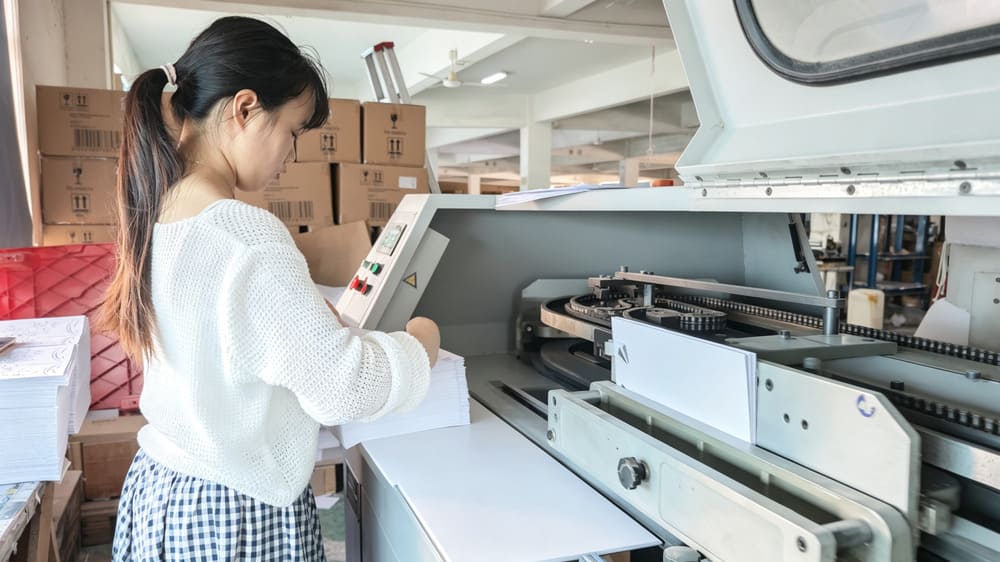
In YIMU’s binding workshop, a trained operator prepares and monitors an industrial adhesive binding machine while books move through the production process. The operator checks the material flow, reviews bound samples, and responds when the output no longer matches the approved requirements.
The machine brings speed and repeatability to the job, but binding quality still depends on the book structure, paper, spine preparation, adhesive, cover, setup, and time allowed for the bond to set.
What Is Industrial Adhesive Binding?
Industrial adhesive binding joins a prepared book block to a cover or spine structure with glue. The term “perfect binding” is commonly used for a process in which gathered pages are clamped, the spine edge is prepared, adhesive is applied, and a soft cover is pressed around the book block.
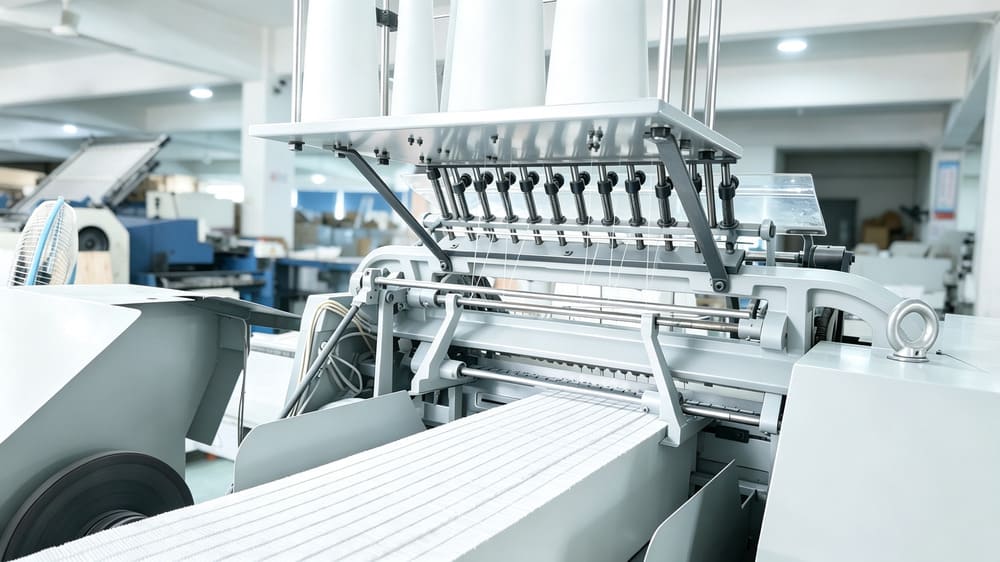
The exact sequence varies by machine and product. A production line may include book-block feeding, clamps, spine milling or roughening, dust removal, adhesive application, cover feeding, cover scoring, nipping, delivery, cooling, and trimming. Some machines combine several of these functions, while other factories use separate equipment for individual steps.
Adhesive binding is widely used for:
- softcover notebooks and journals;
- paperback books;
- manuals and catalogs;
- planners with suitable page and cover structures; and
- other printed products that require a square, covered spine.
Not every notebook follows this route. Page count, paper, binding strength, desired opening behavior, cover design, quantity, and target cost all influence the choice between adhesive binding, sewn binding, wire binding, stitching, or another construction.
The Role of an Adhesive Binding Machine in Book Production
An industrial binder connects several production requirements in one controlled flow. It must keep the book block square, expose or prepare the spine for bonding, apply adhesive to the required area, position the cover, and press the parts together without shifting the printed content.
This has consequences for both function and appearance. The bond must hold the pages or sections as designed. The cover needs to sit evenly around the spine. The finished block must also remain suitable for cooling, final trimming, packing, and normal use.
The binder cannot correct every upstream problem. A mixed page sequence, poorly cut block, unsuitable grain direction, excessive coating near the spine, or incorrectly scored cover may still cause defects. Good adhesive binding therefore starts before the book reaches the machine.
How YIMU Prepares an Adhesive Binding Job
1. Confirming the product specification
The operator and production team work from the approved requirements for the order. These may include the finished size, page count, paper, book-block structure, cover material, spine width, binding method, adhesive requirement, and final trim size.
Artwork versions and physical references must stay linked to the correct job. This is particularly important when an order contains several cover designs, languages, dated planner versions, or similar-looking interiors.
2. Checking the book block
Before binding, the team checks whether the pages or gathered sections are in the correct order and suitable for the planned process. The book block should be aligned and free from obvious damage or contamination in the bonding area.
Its thickness also needs to match the cover and machine setup. A change in paper, page count, or section structure can change the spine width, even when the front-cover dimensions remain the same.
3. Checking the cover
The cover artwork, grain direction, size, score positions, spine width, and surface treatment can affect binding. The spine and hinge areas need to correspond to the actual book block. Heavy ink coverage, lamination, coating, or other finishes near the bonding zone may require additional consideration during sampling and material selection.
4. Preparing the binding process
The machine is set up according to the equipment manual, approved job, and adhesive supplier’s requirements. Depending on the line and construction, preparation may include clamp settings, book-block position, spine treatment, glue application, cover feeding, scoring, nipping, and delivery.
Adhesive temperature, application condition, and working time are controlled for the specific adhesive system. More glue or more heat does not automatically produce a stronger book. Incorrect conditions can reduce bond quality, distort the spine, mark the cover, or create safety risks.
5. Checking initial bound samples
The first books are reviewed before the full run continues. The team checks page order, spine preparation, glue coverage, cover position, hinge and score alignment, squareness, visible glue, and the general shape of the book.
The bond also needs enough time to cool, set, or cure as required before a meaningful handling or pull assessment is made. Testing a book too early can give a misleading result or damage a bond that has not reached its intended condition.
Spine Preparation and Adhesive Application
In many perfect-binding processes, the spine edge is milled or roughened before gluing. This opens the binding edge and creates a surface that allows the adhesive system to connect with the paper. The required preparation depends on the book-block structure and binding specification.
Spine preparation must be controlled. Too little preparation may leave an unsuitable bonding surface. Excessive or uneven treatment can damage the page edge, reduce margins, distort the block, or create an uneven spine.
Dust and loose paper fibers can also interfere with bonding, so the condition of the prepared spine matters before adhesive is applied.
The adhesive layer should cover the required area without uncontrolled gaps, buildup, stringing, or contamination. Some constructions use spine glue together with side glue to support cover attachment near the hinges. The selected adhesive and application method must suit the paper, cover, book thickness, production conditions, and expected use.
Safe Working Practices Around an Adhesive Binder
Industrial adhesive binding machines can contain moving clamps, indexing carriages, milling cutters, glue rollers, cover feeders, belts, and pressing mechanisms. Hot-melt systems may also contain heated glue, tanks, hoses, and surfaces that can cause burns.
General safety principles include:
- allowing only trained and authorized personnel to operate, adjust, clean, or service the machine;
- completing the required pre-start inspection;
- confirming that fixed guards, interlocked guards, screens, and emergency controls are in place and functioning;
- keeping hands, clothing, hair, tools, and loose items away from clamps, cutters, rollers, conveyors, and other moving parts;
- keeping clear of heated adhesive and hot machine surfaces;
- using the specified method and protective equipment when replenishing or handling adhesive;
- never bypassing a guard, temperature control, interlock, or other safety device;
- stopping the line and following the approved procedure before clearing a jam or misfeed;
- isolating hazardous energy before cleaning, maintenance, cutter access, glue-system work, or other servicing as required by the machine procedure; and
- reporting leaks, damaged guards, unusual temperature readings, abnormal noise, repeated feeding faults, or unexpected movement.
The exact procedure depends on YIMU’s machine, adhesive system, risk assessment, and workplace rules. Workshop footage should not be presented as an operating tutorial.
How YIMU Checks Adhesive-Bound Products
Page and component sequence
The team confirms that the correct interior and cover have been combined. A strong bond cannot compensate for missing pages, duplicated sections, reversed components, or the wrong cover version.
Spine preparation
The prepared edge is assessed for consistency and suitability before or during setup. The team watches for incomplete, uneven, or overly aggressive preparation that may affect the bond or final appearance.
Glue coverage and condition
Bound samples are examined for the intended adhesive coverage. Visible gaps, excess squeeze-out, glue on printed surfaces, stringing, or an irregular film may indicate that the process needs attention.
Cover and spine alignment
The cover should align with the book block and sit squarely around the spine. The spine artwork, front and back panels, and hinge or score lines are checked against the approved sample and job requirement.
Squareness and shape
The book is reviewed from several angles. The cover, spine, and book block should not show an unintended skew, twist, step, or deformation. A problem at this stage can affect final trimming and shelf appearance.
Bond assessment
After the required setting or curing period, samples can be opened and handled according to the quality plan. The team looks for loose pages, separation at the spine, weak areas, paper failure in an unexpected location, or excessive stiffness.
The appropriate test depends on the product and specification. Visual opening checks, controlled page-pull testing, or other agreed methods may be used. Test conditions and acceptance criteria should be defined rather than judged from one aggressive manual pull.
Checks throughout the run
The first approved sample is a starting reference. Book-block thickness, adhesive condition, feeding, temperature, cover position, and ambient conditions can change during production. In-process checks help the operator identify variation before more books move into cooling and trimming.
Cooling, Curing, and Final Trimming
A newly bound book may look complete when it leaves the machine, but the adhesive still needs the specified time and conditions to develop its intended properties. Books should be handled, stacked, and transferred in a way that does not shift the cover or deform the warm spine.
The required delay depends on the adhesive system and production method. “Cool to the touch” is not always the same as fully ready for testing, packing, or demanding use.
After the bond is stable enough for the next process, the book may be trimmed to its finished dimensions. Accurate trimming creates clean head, foot, and fore-edge dimensions while preserving the intended margins. Binding and trimming therefore need to be planned together from the artwork and sample stage.
How Material Choices Affect Binding Quality
Paper and cover materials do not all respond to adhesive in the same way. Coated papers, uncoated papers, synthetic materials, laminated covers, heavy ink coverage, and different surface treatments may require different preparation or adhesive choices.
Page count and paper thickness determine book-block thickness. Paper grain direction can influence opening behavior and spine stress. Cover board or cover stock must bend along the planned scores without unwanted cracking or lifting.
These factors are one reason YIMU uses physical samples before bulk production. A sample allows the buyer and production team to evaluate the actual combination of paper, printing, cover finish, spine construction, adhesive binding, trimming, and opening behavior.
What Adhesive Binding Means for Custom Notebook Buyers
Buyers should evaluate more than whether the pages remain attached during a quick inspection. A useful binding review includes cover alignment, spine shape, page order, trim margins, opening behavior, visible glue, hinge movement, and performance after the adhesive has properly set.
The intended market also matters. A promotional notebook, frequently used planner, instructional manual, or retail journal may have different expectations for cost, appearance, opening, and repeated handling.
Our custom notebook sample checklist explains what to approve before mass production. You can also browse YIMU’s custom notebook products and explore our OEM and ODM notebook manufacturing services.
Frequently Asked Questions
What does an industrial adhesive binding machine do?
It holds and transports a book block through controlled binding stages. Depending on the line, these may include spine preparation, adhesive application, cover feeding, scoring, nipping, and delivery. Cooling and trimming may occur on separate equipment.
Is adhesive binding the same as perfect binding?
Perfect binding is a common form of adhesive binding, usually associated with a square-spined softcover book. “Adhesive binding” is a broader term and can include other constructions that use glue in the spine or cover attachment.
Which adhesive is best for notebook binding?
There is no universal answer. The correct adhesive depends on the paper, coatings, cover, spine preparation, book thickness, production equipment, opening requirements, operating conditions, and target performance. The system should be confirmed through supplier guidance and production trials.
Why is spine preparation important?
The adhesive needs a suitable surface to connect the pages or sections. Controlled milling or roughening can expose paper fibers and create the required bonding surface. Uneven or incorrect preparation can weaken the bond or damage the book block.
When can a newly bound book be tested?
It should be tested after the adhesive has cooled, set, or cured for the period required by the selected system and quality plan. Immediate testing may not represent the final bond.
Can adhesive-bound notebooks open completely flat?
Most conventional perfect-bound products do not open as flat as some spiral, Wire-O, or specially engineered sewn constructions. Opening behavior varies with paper, grain direction, page count, spine preparation, adhesive flexibility, glue film, cover scoring, and overall design.
Is this article an operating guide for a glue binding machine?
No. Industrial binders contain cutters, clamps, rollers, heated adhesive, and other hazardous components. Only trained and authorized personnel should operate or service the equipment according to the exact manual and workplace procedures.
Plan an Adhesive-Bound Notebook with YIMU
Share your notebook size, page count, paper, cover material, surface finish, preferred binding, order quantity, packaging needs, and target market. YIMU can review how these choices fit into the printing, book-block preparation, binding, cooling, and trimming plan.