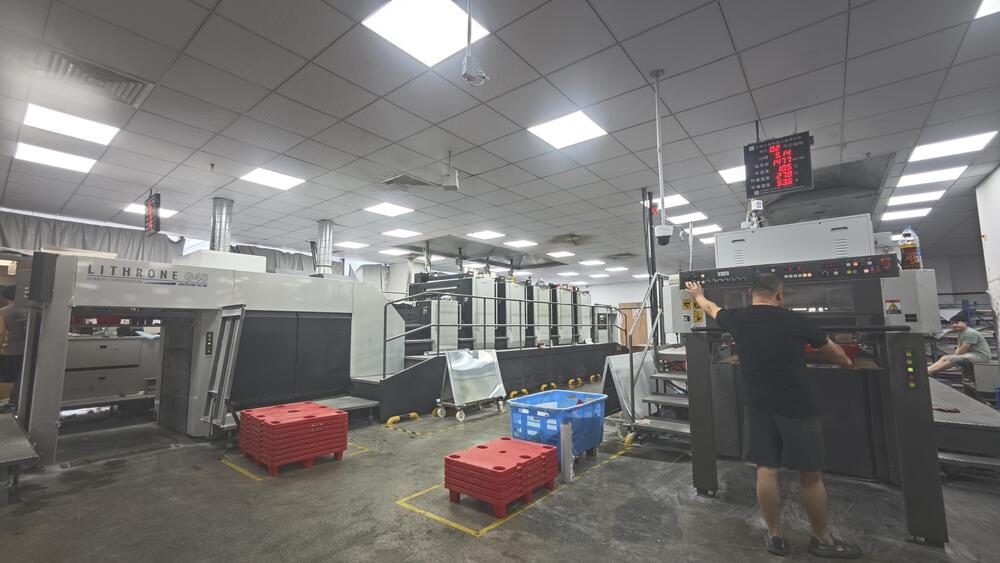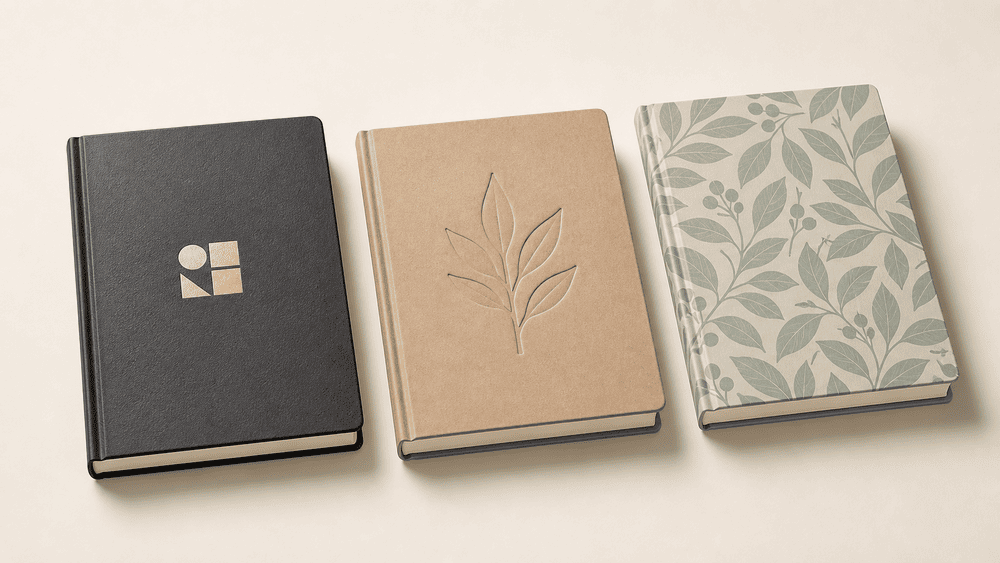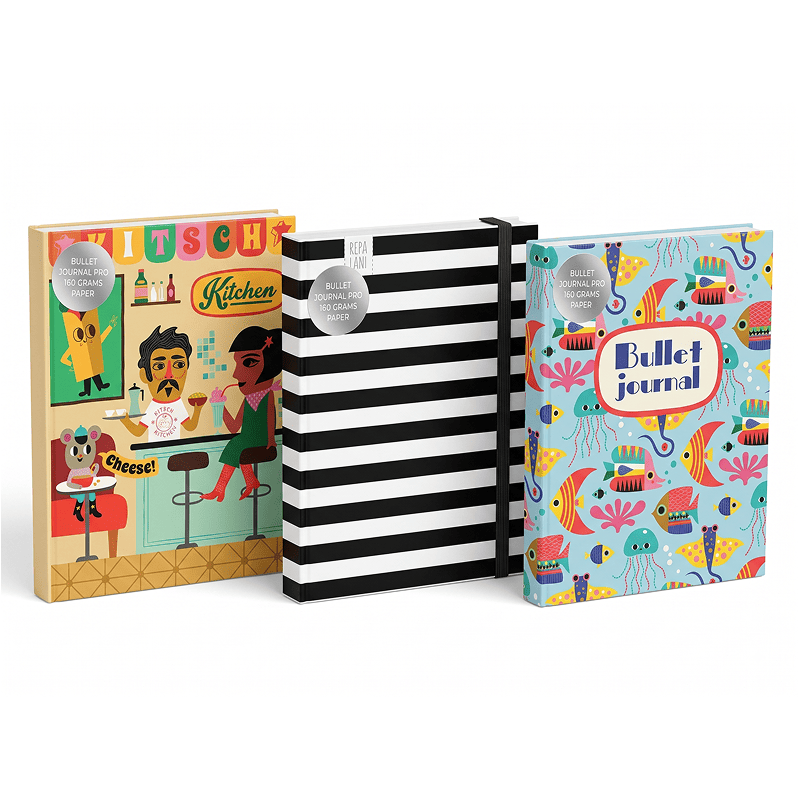
One of the first questions buyers ask when developing a custom notebook is: What is the minimum order quantity?
The short answer is that there is no universal custom notebook MOQ. The minimum quantity depends on the notebook structure, materials, printing process, number of designs, finishing options, packaging, and production setup.
At YIMU Packaging, the standard MOQ for custom notebook projects starts from 3,000 pieces. The final quantity is confirmed after reviewing your specifications because a simple printed notebook and a multi-design private label collection involve very different production requirements.
Understanding what affects MOQ can help you develop a more practical specification, control costs, and receive a more accurate quotation.
What Does Custom Notebook MOQ Mean?
MOQ stands for minimum order quantity. It is the smallest quantity a manufacturer can produce efficiently for a particular product specification.
For custom notebooks, MOQ may apply to:
- The complete order
- Each notebook size
- Each cover design
- Each color
- Each inner-page layout
- Each binding structure
- Each packaging style
For example, an order of 3,000 notebooks in one size and one design is different from an order of 3,000 notebooks divided among five sizes, five cover designs, and several packaging formats.
Even if the total quantity is the same, the second project requires more production setups, material changes, quality checks, and packaging arrangements.
This is why buyers should always ask whether the quoted MOQ applies to the total order or to each individual SKU.
What Determines Custom Notebook MOQ?
1. Notebook Type and Binding Method
The notebook structure is one of the main factors affecting MOQ.
Common binding options include:
- Spiral or Wire-O binding
- Hardcover or case binding
- Perfect binding
- Thread-sewn binding
- Saddle stitching
- Adhesive binding
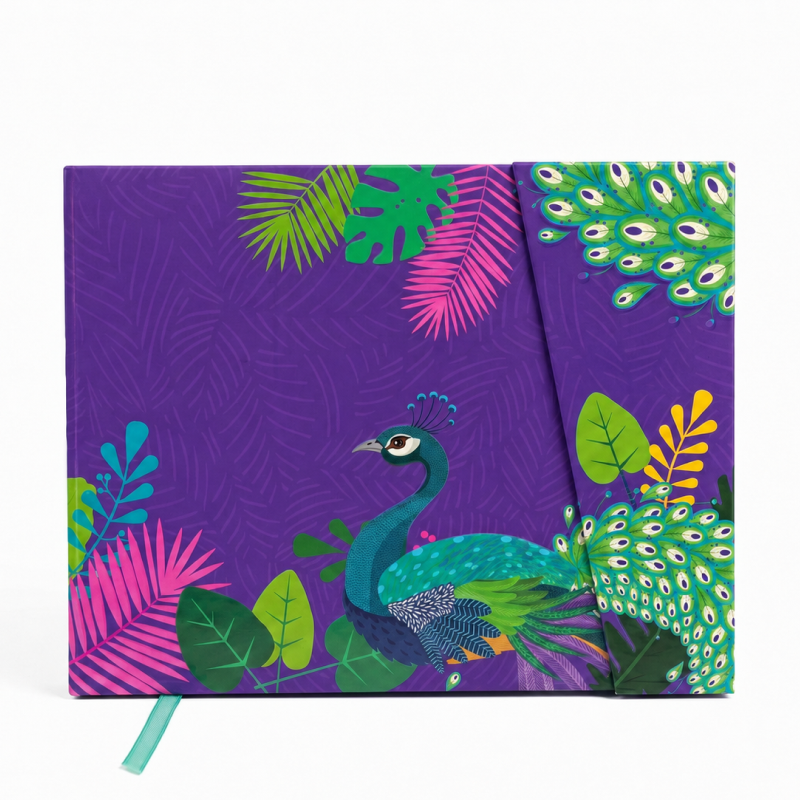
A standard spiral notebook may use readily available wire sizes and familiar production settings. A custom hardcover notebook with a special flap, magnetic closure, pen loop, pocket, and ribbon bookmarks requires more materials and assembly steps.
The more complex the structure, the more important it becomes to produce enough units to cover setup time and maintain consistent quality.
Before requesting a quotation, confirm whether your product should open flat, fold back on itself, have a visible spine, or support a high page count. These functional requirements help determine the most suitable binding method.
2. Standard or Custom Size
Standard notebook sizes are generally easier to produce than unusual dimensions.
Common sizes include:
- A4
- A5
- A6
- A7
- B5
- Pocket size
Custom dimensions may require changes to cutting plans, cover boards, inner pages, packaging, and other components. They may also produce more material waste if the size does not fit efficiently on standard printing sheets.
Choosing a standard size, especially A5 or A6, can make material planning simpler and improve the overall economics of the order.
YIMU can manufacture notebooks from A4 to A7 as well as custom dimensions, but the final MOQ depends on the complete specification.
3. Cover and Inner-Page Materials
A custom notebook can combine several different materials, including:
- Coated paper
- Uncoated writing paper
- Kraft paper
- Greyboard
- PP
- PU leather
- Specialty paper
- Silver card
- Recycled paper
- FSC-certified paper options
Standard materials are usually easier to source in practical production quantities. Specialty paper, custom-colored PU, unusual board thicknesses, or materials made specifically for one project may have their own supplier minimums.
The same applies to components such as:
- Elastic bands
- Ribbon bookmarks
- Pen loops
- Metal accessories
- Magnetic closures
- Custom-colored binding wire
If a material must be manufactured, dyed, printed, or purchased specifically for your project, it can increase the required order quantity.
4. Printing Method and Page Design
Printing requirements affect both MOQ and unit cost.
A notebook with the same lined pages throughout is more straightforward than a notebook containing:
- Multiple planner sections
- Custom illustrations
- Monthly and weekly layouts
- Branded worksheets
- Colored divider pages
- Different content on every page
Custom inner pages require additional artwork preparation, printing plates, color control, and page-sequence checks.
Offset printing is normally more economical for larger quantities because its setup costs can be distributed across more units. Digital printing can support smaller quantities in some situations, but it may not provide the same cost efficiency for large-volume production.
For bulk private label notebooks, using one shared inner-page design across several cover variations can help simplify production.
5. Number of Cover Designs and SKUs
Buyers often want to divide one order across several patterns or colors.
For example:
- 3,000 notebooks in one design
- 3,000 notebooks divided across five designs
- 3,000 notebooks divided across five sizes and five designs
These are three different production scenarios.
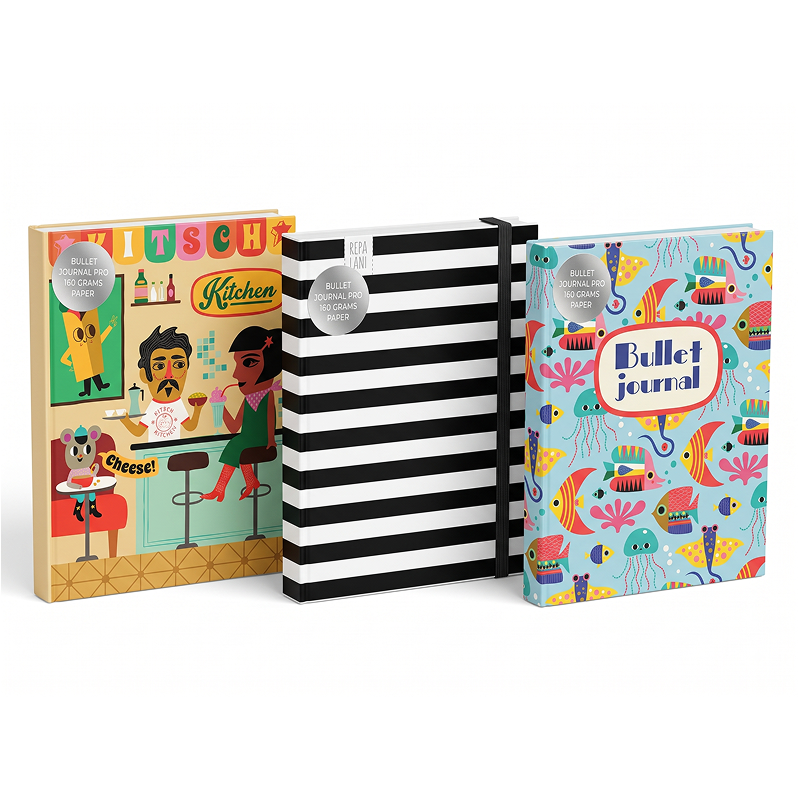
Multiple cover artworks may be possible within one order when the notebooks share the same size, paper, binding, inner pages, finishes, and packaging. However, every artwork variation still requires separate printing control, sorting, inspection, and packing.
When sizes, page layouts, materials, or structures also change, each variation may be treated as a separate SKU with its own MOQ.
If you are developing a coordinated retail collection, provide the intended quantity for each design rather than only the total quantity.
6. Logo and Decorative Finishes
Notebook finishes can create a stronger retail presentation, but they also require additional production setup.
Common options include:
- Foil stamping
- Embossing
- Debossing
- Spot UV
- Screen printing
- Lamination
- Full-color cover printing
- Die-cut details
Foil stamping and embossing normally require custom dies. Spot UV and screen printing also involve dedicated setup and alignment.
Using several finishes on the same notebook adds production steps and may increase material waste during testing and color adjustment. A higher quantity helps distribute these fixed setup costs across the order.
For a more cost-efficient first project, consider choosing one main decorative finish instead of combining several techniques.
7. Custom Packaging
Packaging can also influence the minimum order quantity.
Options may include:
- Individual shrink wrapping
- Paper belly bands
- Barcode labels
- OPP bags
- Individual gift boxes
- Retail display boxes
- Custom printed cartons
- Multi-product stationery sets
Standard shrink wrapping or simple labels are generally easier to arrange. Custom printed boxes and retail displays may have separate printing and converting minimums.
If each notebook design requires different packaging artwork, the packaging supplier may calculate MOQ per design rather than for the complete order.
Packaging should therefore be included in the project specification from the beginning, not added after the notebooks have entered production.
How Can You Make a Custom Notebook Order More Efficient?
If your planned quantity is close to the manufacturer’s minimum, several decisions can make the project easier to produce.
Use a Standard Notebook Size
A4, A5, A6, and A7 formats usually work more efficiently with common paper and packaging specifications.
Keep the Same Inner Pages
Use one shared lined, blank, dotted, grid, or planner layout across different cover designs.
Reduce the Number of SKUs
Start with fewer sizes, colors, and design variations. Additional versions can be introduced after the first collection is tested in the market.
Choose Available Materials
Standard paper, cover materials, wire colors, ribbons, and elastic bands can reduce sourcing complications.
Simplify the Finishing
Select one or two finishes that contribute most to the design instead of combining foil stamping, embossing, spot UV, and multiple accessories in the same first order.
Use Shared Packaging
A common packaging structure with a changeable barcode label is usually more efficient than completely different packaging for every cover design.
Start with an Existing Structure
Using a proven notebook construction and customizing the artwork, colors, logo, and packaging can be more efficient than developing a completely new structure.
Does a Higher Order Quantity Reduce the Unit Price?
In most cases, yes.
Custom notebook production includes fixed costs such as:
- Artwork and file preparation
- Printing setup
- Cutting and binding setup
- Foil or embossing dies
- Material preparation
- Sample development
- Quality-control arrangements
When these costs are distributed across a larger order, the unit price normally decreases.
Higher quantities may also improve material purchasing efficiency and reduce the percentage of production waste. However, the final price still depends on paper weight, page count, binding, cover construction, printing, finishes, accessories, and packaging.
The lowest unit price does not always produce the best purchasing decision. Buyers should also consider inventory turnover, storage costs, shipping plans, and the expected sales volume for each design.
What Information Is Needed for an Accurate MOQ and Quote?
To receive an accurate recommendation, send the manufacturer as much of the following information as possible:
- Target order quantity
- Number of cover designs
- Quantity required for each design
- Notebook size
- Page or sheet count
- Inner-page layout
- Paper type and GSM
- Cover material
- Binding method
- Logo and finishing requirements
- Accessories
- Packaging requirements
- Delivery country
- Required delivery date
- Artwork or reference images
If some specifications are not yet decided, explain the target market, retail price, budget, and intended use. An experienced manufacturer can then recommend a practical combination of materials and production methods.
YIMU Custom Notebook MOQ
YIMU’s standard custom notebook MOQ starts from 3,000 pieces.
The final MOQ may vary according to:
- Product type
- Number of designs
- Materials
- Notebook dimensions
- Printing requirements
- Binding structure
- Decorative finishes
- Accessories
- Packaging
Samples are typically completed within 3 to 7 days after the artwork and specifications are confirmed. Bulk production normally takes approximately 20 to 30 days after sample approval and order confirmation.
Actual timing may change depending on order quantity, production complexity, and material availability.
Frequently Asked Questions
What is the minimum order quantity for custom notebooks?
There is no single MOQ for every custom notebook. At YIMU, the standard MOQ starts from 3,000 pieces, subject to the notebook structure, materials, designs, finishes, and packaging.
Can several cover designs share the same MOQ?
Sometimes. This is easier when all designs use the same size, inner pages, paper, binding, finishes, and packaging. The minimum quantity for each design must still be confirmed during quotation.
Is MOQ calculated per design or for the total order?
It depends on the specification. Different sizes, materials, inner pages, binding methods, or packaging styles may be treated as separate SKUs with separate minimum quantities.
Can I order a custom sample before mass production?
Yes. A physical sample can be produced for review before bulk production. YIMU’s typical sampling time is 3 to 7 days after the specifications and artwork are confirmed.
Can I customize the inner pages?
Yes. Inner pages can be lined, blank, dotted, grid, planner-style, illustrated, branded, or fully customized.
What is the most cost-effective custom notebook specification?
A standard size, commonly available materials, one inner-page layout, fewer cover variations, and simple packaging usually create a more efficient production plan. The best specification still depends on your target market and product positioning.
Does a larger order always have a lower unit price?
A larger quantity usually reduces the unit cost because fixed setup expenses are distributed across more notebooks. Special materials, complex finishes, and premium packaging can still increase the final price.
Plan Your Custom Notebook Project with YIMU
A practical custom notebook MOQ is not determined by quantity alone. It reflects the complete combination of materials, printing, binding, artwork variations, finishing, and packaging.
Share your design idea, preferred size, target quantity, inner-page requirements, packaging needs, destination, and delivery schedule with YIMU. Our team will review the specification and recommend a production-ready solution for your market.
Ready to develop your custom notebook collection?