When a brand starts looking for a custom notebook manufacturer, two terms appear repeatedly: OEM and ODM.
Both models can produce notebooks under your brand, but they begin from different starting points. One gives the buyer greater control over the product specification. The other can reduce development work by using an existing product structure or a manufacturer-supported concept.
Choosing between OEM vs ODM notebooks affects product uniqueness, development time, cost, minimum order quantity, intellectual property, and how quickly your collection can reach the market.
This guide explains the differences, the advantages of each model, and the questions your brand should answer before requesting a quotation.
What Is OEM Notebook Manufacturing?
OEM stands for Original Equipment Manufacturer.
In an OEM notebook project, the buyer normally provides the product concept, artwork, specifications, or technical requirements. The manufacturer then develops samples and produces the notebook according to the approved specification.
The buyer may define details such as:
- Notebook dimensions
- Cover structure and material
- Page count and paper weight
- Inner-page layout
- Binding method
- Logo placement
- Printing colors
- Decorative finishes
- Accessories
- Retail packaging
For example, a stationery brand may provide a complete A5 journal design with a custom page layout, specific paper, a hardcover structure, two ribbon bookmarks, an elastic closure, foil-stamped artwork, and branded retail packaging. The manufacturer’s role is to translate that specification into a production-ready product and manufacture it consistently at scale.
OEM is generally the better fit when the brand already knows what it wants to make and needs a production partner to execute the design.
What Is ODM Notebook Manufacturing?
ODM stands for Original Design Manufacturer.
In an ODM notebook project, the manufacturer provides an existing product concept, structure, or design direction that the buyer can adapt for its brand. The buyer may select from available notebook formats and customize certain elements instead of developing every detail from the beginning.
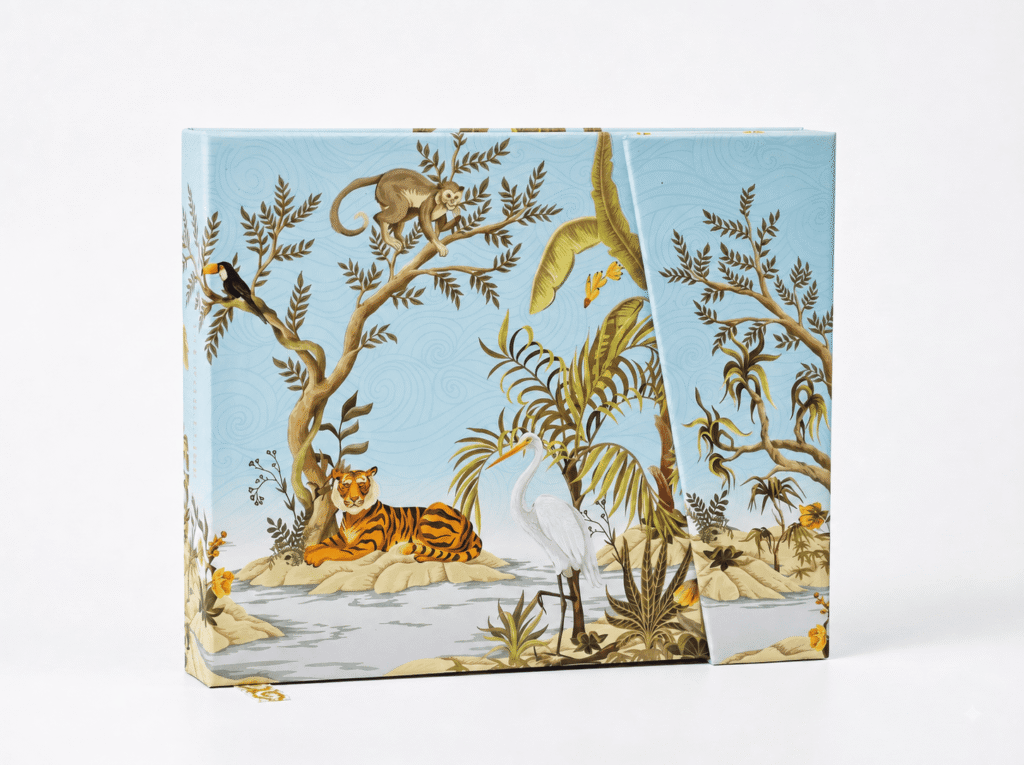
ODM customization may include:
- Adding a logo
- Changing cover colors
- Applying new cover artwork
- Selecting an existing size
- Choosing available paper and binding options
- Adjusting the inner-page layout
- Selecting accessories
- Adding branded packaging
For example, a buyer may choose an existing hardcover notebook structure, replace the cover artwork, select brand colors, add a foil logo, and use a standard lined interior. Because the core construction has already been tested, development can be more straightforward than creating a completely new notebook structure.
ODM is often suitable for brands that want to launch efficiently but do not have a complete technical specification or an experienced product development team.
OEM vs ODM Notebooks: Key Differences
| Factor | OEM Notebooks | ODM Notebooks |
|---|---|---|
| Starting point | Buyer’s original concept or specification | Existing structure, concept, or manufacturer-supported design |
| Product control | High | Moderate to high, depending on the project |
| Product uniqueness | Usually higher | Depends on how extensively the product is adapted |
| Development work | More buyer-side planning and technical confirmation | More support from existing options and manufacturer experience |
| Sampling complexity | Often higher | Often more straightforward |
| Time to market | Usually longer for a new structure | Usually faster when using proven structures |
| Development cost | May be higher because of tooling, testing, and setup | May be lower when existing components are used |
| Best suited for | Established brands, distinctive products, proprietary layouts | New brands, faster launches, market testing, standard product formats |
These definitions are useful, but they are not applied identically by every supplier. Some manufacturers use OEM to describe any logo customization, while others use ODM for projects that still involve significant buyer input.
Before placing an order, confirm the actual responsibilities, deliverables, design scope, and ownership terms instead of relying only on the OEM or ODM label.
When Should Your Brand Choose OEM Notebooks?
OEM manufacturing is usually the stronger choice in the following situations.
You Have an Original Product Concept
Your notebook may include a distinctive cover structure, unusual dimensions, proprietary inner pages, custom accessories, or a specific user experience that cannot be achieved with a standard model.
OEM gives your team more control over how these elements are developed.
Your Brand Needs Strong Product Differentiation
If the notebook will be sold as a core retail product, adding a logo to an existing model may not create enough distinction.
A more customized OEM specification can help establish recognizable features, such as:
- A signature cover shape
- A branded page layout
- A coordinated color system
- Exclusive packaging
- Custom functional details
- A consistent family of products
You Already Have Design and Product Development Resources
OEM projects work best when the buyer can provide clear artwork, dimensions, material preferences, performance requirements, and packaging expectations.
The manufacturer can help refine production details, but the buyer should be able to make timely decisions and approve samples against a defined brief.
You Are Planning Repeat Orders
The development work required for an OEM notebook becomes more economical when the design will be reordered or expanded into a larger collection.
A well-documented specification can also make future production more consistent.
When Should Your Brand Choose ODM Notebooks?
ODM manufacturing may be more practical in the following situations.
You Want to Launch More Quickly
Starting with a proven notebook structure reduces the number of decisions required during early development. Your brand can focus on artwork, color, logo treatment, inner pages, and packaging.
This can shorten the path from initial idea to approved sample.
You Do Not Have a Complete Technical Specification
A buyer may know the target market, price range, visual direction, and intended use without knowing which paper weight, binding, cover board, or finishing process to select.
An ODM manufacturer can recommend combinations based on existing product experience.
You Want to Test a New Category
If notebooks are a new product line for your business, using a proven structure can reduce development risk. You can validate customer demand before investing in a completely original construction.
Your Product Uses a Familiar Format
Many successful notebooks use established formats such as:
- A5 hardcover journals
- PU notebooks with elastic closures
- Spiral notebooks with printed covers
- Perfect bound notebooks
- Thread-sewn notebooks
- Sticky note sets
If the value comes mainly from your artwork, branding, page content, or retail concept, a heavily customized structure may not be necessary.
The Hybrid Model: A Common Choice for Private Label Notebooks
In practice, many custom notebook projects combine elements of OEM and ODM.
A brand may begin with an existing notebook structure and then customize:
- Cover artwork
- Inner-page content
- Paper specification
- Binding color
- Logo finish
- Accessories
- Packaging
This hybrid approach offers more differentiation than basic logo printing while avoiding the development work of a completely new structure.
For many private label notebook brands, this is the most practical balance between originality, cost, production reliability, and time to market.
The important question is not simply whether a project is called OEM or ODM. The important question is which parts are standard, which parts are custom, and who is responsible for each development decision.
Seven Factors to Consider Before Choosing OEM or ODM
1. Required Level of Product Uniqueness
Decide whether the notebook must have a unique physical structure or whether brand artwork, materials, and packaging can create enough differentiation.
If the structure itself is part of your competitive advantage, OEM is usually more appropriate.
2. Internal Design Resources
OEM requires a clearer brief and more product decisions. If your team does not have packaging, print, or stationery development experience, ODM support may make the process easier.
3. Target Launch Date
A completely new construction may require additional sampling and adjustments. If the launch date is fixed, using an existing structure can reduce development uncertainty.
4. Budget and Order Volume
New structures, custom components, special materials, and dedicated tooling can increase development costs and minimum quantities.
Your projected order volume should justify the level of customization being requested.
5. Target Retail Price
Every specification decision affects cost. A premium notebook may support custom materials, multiple finishes, accessories, and gift packaging. A value-focused retail product needs a simpler and more efficient specification.
Share the target price positioning with the manufacturer so the product can be designed around realistic production economics.
6. Intellectual Property Requirements
If your project includes proprietary artwork, licensed characters, original page content, or a unique structural design, clarify confidentiality and ownership before sharing production files.
The terms OEM and ODM do not automatically determine who owns artwork, tooling, samples, or product designs. These points should be stated clearly in written agreements.
7. Long-Term Product Strategy
Consider whether the notebook is a one-time promotional item or the beginning of a repeat retail collection.
A repeat product line may justify more OEM development. A seasonal launch or market test may benefit from an ODM or hybrid approach.
What Should You Ask an OEM or ODM Notebook Manufacturer?
Before selecting a manufacturing partner, ask practical questions about the project scope.
Product Development
- Can you work from finished artwork, reference images, or an initial idea?
- Which parts of the notebook are existing and which will be newly developed?
- Can the size, inner pages, binding, materials, and packaging be customized?
- Will custom tooling or dies be required?
Sampling
- What type of sample will be produced?
- How long will sampling take?
- Which materials and finishes will match mass production?
- How many revision rounds are included?
Production
- What is the MOQ for the total order and for each design?
- What is the expected bulk production time?
- Which production steps are completed in-house?
- How is quality checked during production and before shipment?
Artwork and Ownership
- Who owns the buyer-supplied artwork?
- Who owns newly developed structural drawings or tooling?
- Can the same manufacturer-developed design be sold to other buyers?
- Are confidentiality terms available when required?
Packaging and Delivery
- Can retail packaging and carton marks be customized?
- What information is needed for an accurate shipping plan?
- Can products be packed according to retailer or distributor requirements?
Clear answers to these questions are more useful than an OEM or ODM label alone.
How the OEM Notebook Process Works
A typical OEM notebook project follows these steps:
- The buyer submits a product brief, artwork, quantities, target market, and delivery requirements.
- The manufacturer reviews the specification and recommends production adjustments where needed.
- Materials, dimensions, binding, finishing, accessories, packaging, and pricing are confirmed.
- A physical sample is produced.
- The buyer checks the sample and confirms any revisions.
- The approved sample becomes the reference for mass production.
- Production, quality inspection, packing, and shipment preparation are completed.
The accuracy of the original brief has a major influence on quotation speed and sampling efficiency.
How the ODM Notebook Process Works
A typical ODM notebook project may follow these steps:
- The buyer shares the target market, product positioning, quantity, budget, and visual direction.
- The manufacturer recommends suitable notebook structures and material options.
- The buyer selects a model and confirms the required changes.
- Brand artwork, colors, inner pages, finishes, accessories, and packaging are applied.
- A customized sample is produced for approval.
- Mass production begins after the final specification is confirmed.
The process can be faster when the selected structure and materials have already been used in previous production.
OEM and ODM Notebook Manufacturing at YIMU
YIMU supports both OEM and ODM custom notebook projects for brands, importers, wholesalers, retailers, and promotional product buyers.
Customers can provide a completed design or begin with an initial product idea. Depending on the project, YIMU can support decisions involving:
- Notebook size
- Cover material and structure
- Inner-page layout
- Paper selection
- Binding method
- Cover artwork and logo
- Foil stamping, embossing, UV printing, lamination, and screen printing
- Elastic bands, ribbons, pen loops, pockets, and other accessories
- Retail packaging and shipping cartons
YIMU’s core product range includes spiral notebooks, hardcover notebooks, PU notebooks, perfect bound notebooks, stitched notebooks, sticky notes, and other custom paper products.
The standard MOQ starts from 5,000 pieces, subject to the product, materials, design variations, and packaging. Samples are typically completed within 3 to 7 days after the specification and artwork are confirmed. Bulk production normally takes approximately 20 to 30 days after sample approval and order confirmation.
Actual quantities and timing may vary according to project complexity and material availability.
Frequently Asked Questions
Are private label notebooks OEM or ODM?
They can be either. A private label notebook may be produced from the buyer’s original specification, an existing manufacturer structure, or a combination of both.
Is OEM better than ODM?
Neither model is automatically better. OEM is usually more suitable for highly differentiated products and buyers with a clear specification. ODM is often more efficient for brands that want to use a proven structure and focus on branding and selected custom details.
Is ODM notebook manufacturing cheaper?
ODM can reduce some development and tooling costs when existing structures and materials are used. The final price still depends on quantity, paper, binding, printing, finishes, accessories, and packaging.
Who owns an OEM or ODM notebook design?
Ownership depends on the source of the artwork, the development arrangement, tooling payments, and the written agreement between the buyer and manufacturer. The OEM or ODM label alone does not establish ownership.
Can ODM notebooks have custom inner pages?
Yes. Depending on the selected structure, inner pages can be lined, dotted, blank, grid, planner-style, branded, illustrated, or fully customized.
Does OEM or ODM affect MOQ?
It can. A completely new OEM structure or custom material may require a higher minimum quantity. An ODM project using available components may be easier to produce, although MOQ still depends on the complete specification.
Can a brand start with ODM and move to OEM later?
Yes. A brand can begin with a proven structure to test the market, then develop more distinctive materials, page layouts, accessories, packaging, or structures for future collections.
Which Manufacturing Model Does Your Brand Need?
Choose OEM when your brand has a clear original specification, needs strong product differentiation, and is prepared to invest in development.
Choose ODM when you want to launch more efficiently, use a proven notebook structure, and customize the elements that matter most to your market.
Choose a hybrid approach when you want the reliability of an existing construction combined with custom artwork, inner pages, finishes, accessories, and packaging.
Whichever model you choose, define the product scope, responsibilities, ownership, MOQ, sampling process, and quality standard before production begins.
Planning an OEM, ODM, or private label notebook project?