The strength of a sewn notebook begins inside the spine, where most buyers never see the production work. Folded groups of pages, known as signatures, are arranged in sequence and joined with thread to form a book block. If the order, fold position, or sewing setup is wrong, the problem can affect the whole notebook.
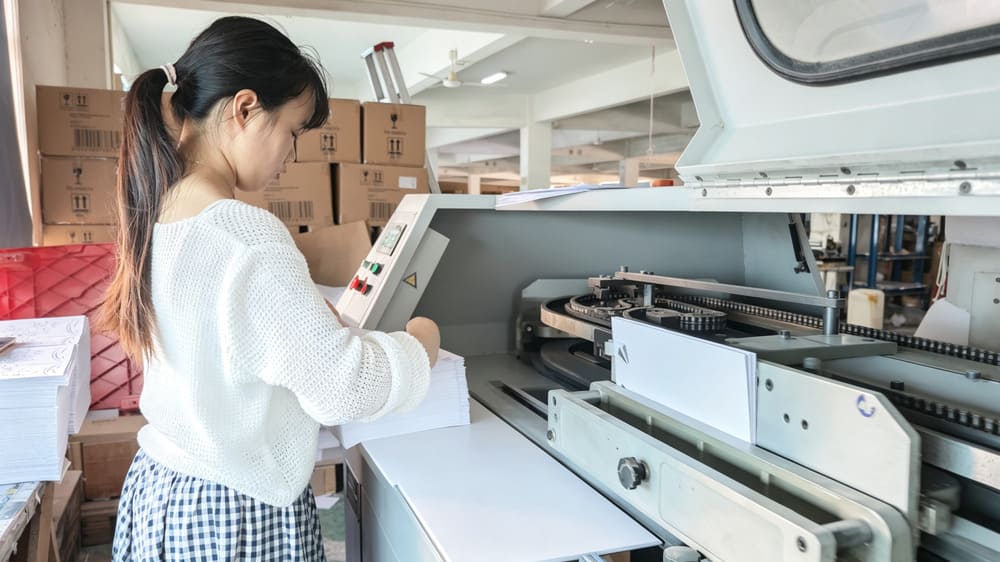
In YIMU’s book sewing workshop, a trained operator loads folded signatures, monitors the sewing process, removes the connected book blocks, and checks the output before it moves to the next binding stage. The machine repeats the stitch pattern, while the operator and production controls keep the job aligned with the approved notebook specification.
What Is Book Sewing?
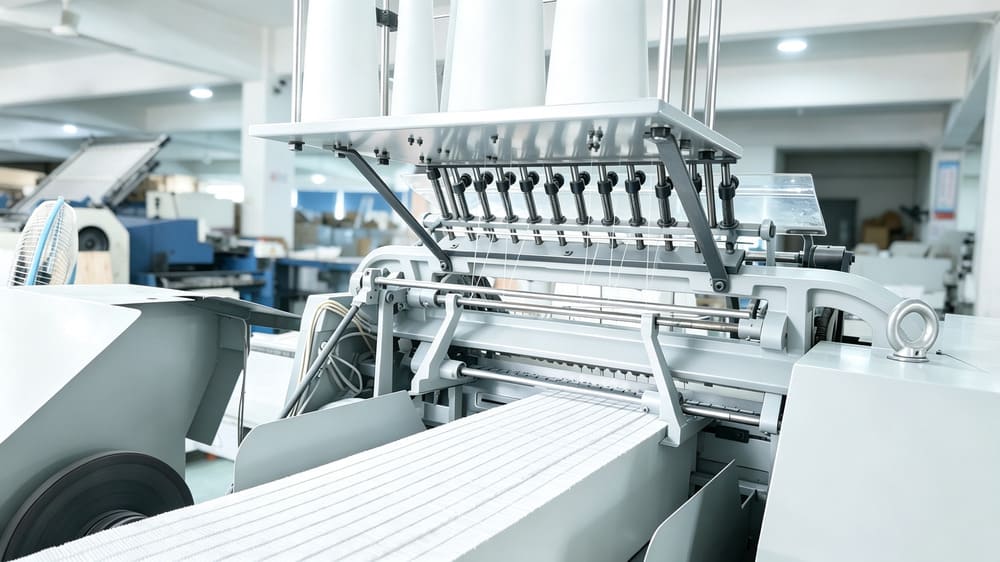
Book sewing is a binding process used to connect folded signatures with thread. The thread passes through or close to the fold of each signature, depending on the sewing system, and links one section to the next. The completed group becomes a sewn book block.
This method differs from binding loose sheets with adhesive alone. It creates a mechanical connection between the folded sections before later spine treatments, cover attachment, and finishing are completed.
For custom notebooks, sewn construction can be useful when the design calls for:
- a book block made from folded signatures;
- secure page retention under repeated handling;
- a flexible spine structure;
- hardcover or softcover construction that is compatible with sewn sections; or
- an opening profile suited to writing across page spreads.
The final result still depends on the full construction. Paper, grain direction, signature thickness, sewing pattern, thread, spine adhesive, lining, cover structure, and final trimming all influence how the finished notebook performs.
From Printed Sheet to Sewn Book Block
Book sewing does not begin at the sewing machine. The printed sheets must first be planned, cut, folded, and gathered correctly.
Page imposition determines where each page sits on the original press sheet. Folding turns that sheet into a signature with pages in the intended sequence. The signatures are then arranged in order so the sewing machine can connect them into a complete book block.
An error in an earlier step may only become obvious when the sewn section is opened. A reversed signature, duplicated section, missing section, or incorrect fold can disrupt page order even if the stitches themselves look neat. This is why YIMU treats sewing as part of a connected workflow rather than an isolated machine operation.
How YIMU Prepares a Book Sewing Job
1. Confirming the production specification
The operator works from the requirements for the current notebook. Relevant information may include the finished size, page count, signature sequence, paper, binding structure, sewing arrangement, thread requirement, and instructions for the next process.
The correct job materials and approved reference need to be available before setup. Similar-looking interiors, language versions, or dated planner sections must remain clearly identified.
2. Checking the folded signatures
Before sewing, the team checks whether the signatures are folded and gathered as required. The fold should be suitable for the sewing position, and the section should not contain obvious wrinkles, damaged corners, mixed versions, or loose inserts that are not part of the approved construction.
Signature thickness also matters. Paper weight and the number of leaves in each section affect how the section feeds, how the thread sits, and how much the spine builds up after several signatures are joined.
3. Preparing the machine for the job
The operator sets up the sewing machine in accordance with its manual and the approved production plan. Job-specific preparation may involve the feed position, guides, sewing position, thread path, and other adjustments for the book size and section structure.
Threading, needle work, setup inside guarded areas, and mechanical adjustment are carried out only under the machine-specific safe procedure. The exact steps depend on the installed equipment and cannot be inferred from a photograph or video.
4. Sewing and checking the first book block
Initial output is checked before the complete batch continues. The operator reviews page and signature sequence, stitch position, thread condition, section alignment, and the shape of the spine.
If the sample does not match the production requirement, the cause is reviewed before continued production. This may involve the gathered sections, fold accuracy, feeding, thread path, machine setting, or the relationship between several factors.
5. Monitoring production
During the run, the operator watches the material flow and checks sewn output at suitable intervals. Completed book blocks are kept organized and identified so that different orders or versions are not mixed before gluing, lining, trimming, or casing-in.
Safe Working Practices Around a Book Sewing Machine
Automatic and semi-automatic book sewing machines contain needles, sewing heads, grippers, chains, drives, belts, and other powered moving parts. These may create puncture, trapping, crushing, cutting, or entanglement hazards.
General safety principles include:
- allowing only trained and authorized personnel to operate or service the machine;
- completing the required pre-start inspection;
- confirming that fixed guards, interlocked guards, and trip devices are in place and functioning;
- keeping hands, hair, clothing, jewelry, tools, and loose thread away from moving components;
- using the designated controls and never bypassing a safeguard;
- stopping the equipment and following the approved procedure before clearing a jam, correcting a misfeed, or retrieving trapped material;
- isolating hazardous energy before needle replacement, threading work that requires guarded access, cleaning, maintenance, or repair, as required by the machine procedure; and
- reporting broken needles, repeated thread breaks, abnormal noise, damaged guards, or unexpected movement.
This overview does not replace the machine manual, YIMU’s risk assessment, operator training, or local safety requirements. Workers should never copy an operating technique based only on workshop footage.
How Sewing Checks Support Notebook Quality
Signature and page sequence
The most fundamental check is whether all signatures are present and arranged in the correct order. The operator or quality team can open a sample at selected points and compare it with the job reference. This helps detect missing, repeated, or reversed sections before later binding work makes correction more difficult.
Stitch position
The stitches need to follow the intended sewing area along the fold. A stitch that wanders away from its planned position may affect the section or sit too close to printed content. The accepted position depends on the book design, sewing setup, and approved specification.
Thread tension and stitch formation
The thread should connect the signatures without obvious loose loops, missed stitches, repeated breaks, or excessive tightness. Thread that is too loose may not hold the sections as intended. Excessive tension can distort or damage the paper around the sewing holes.
The operator judges the actual sewn sample rather than relying only on a machine setting. Paper behavior and signature thickness can change how the stitch appears.
Section alignment
Signatures should remain aligned as they are joined. A section that sits high, low, or skewed can affect the shape of the book block and complicate later spine processing or trimming.
Paper condition around the fold
The fold and sewing holes are examined for visible tearing, cracking, wrinkling, or deformation. Paper weight, fiber direction, fold quality, printed coverage, and section thickness can all affect this area.
Spine shape and buildup
Thread and folded paper add material at the spine. The way this buildup develops across the full book block influences later pressing, gluing, lining, rounding, cover fit, and opening behavior. The team checks whether the sewn block remains suitable for the planned construction.
In-process sampling
An approved first piece provides the initial reference, but checks continue during production. Thread supply, feeding, section condition, or machine settings may change during a run. Periodic sampling helps the team find a variation before it reaches the next stage.
What Happens After Sewing?
Sewing connects the signatures, but it does not complete the notebook. The sewn book block may move through several additional processes depending on the product design.
These can include spine pressing, adhesive application, gauze or lining attachment, trimming, endpaper preparation, rounding, headband application, and cover assembly. A hardcover journal, flexible softcover notebook, and planner may each use a different combination.
The handoff from sewing is important. A book block with correct sequence and stable alignment gives the next process a better starting point. If a defect is found after the spine has been glued or the cover attached, rework may be more difficult and may damage the printed sections.
Why Sewn Binding Matters to Custom Notebook Buyers
Buyers often choose a binding style based on durability, appearance, cost, page count, and how the notebook should open in use. Sewn binding can provide a strong internal structure and support a flexible opening, but it must be evaluated as part of the complete product.
Paper and signature planning are particularly important. Thick paper or overly thick signatures can create excess bulk at the spine. Printed elements near the fold may be affected by the sewing and binding area. Grain direction can also influence how pages turn and how the book block behaves.
These details are best reviewed during sampling. Buyers should open the sample at the front, middle, and back; check page order; look at the center of several signatures; assess the spine and margins; and test the notebook in the way customers are expected to use it.
Our custom notebook sample checklist explains what to review before mass production. For customized page layouts, see how to customize notebook inner pages. You can also learn about YIMU’s OEM and ODM notebook manufacturing services.
Frequently Asked Questions
What is a signature in notebook binding?
A signature is a group of pages formed by folding a printed sheet. Several signatures can be gathered in order and sewn together to create a book block.
Is sewn binding the same as saddle stitching?
No. Sewn binding joins folded signatures with thread. Saddle stitching usually drives wire staples through the center fold of a booklet. The two methods use different equipment and suit different product structures.
Can a sewn notebook open flat?
Sewn construction can support a more flexible opening, but no single process guarantees a completely flat result. Paper, grain direction, signature structure, spine adhesive, lining, cover design, and finishing all affect how the notebook opens.
What defects are checked after book sewing?
Typical checks include missing or repeated signatures, incorrect page order, loose or broken thread, missed stitches, displaced stitches, torn paper around sewing holes, uneven sections, and an unsuitable spine shape.
Is sewing suitable for every custom notebook?
No. The right binding method depends on the notebook size, page count, paper, desired opening behavior, cover structure, quantity, target cost, and intended use. YIMU reviews these factors when planning the construction.
Is this article an operating guide for a book sewing machine?
No. Book sewing machines contain needles and powered moving mechanisms. Only trained and authorized personnel should operate, thread, adjust, clear, clean, or maintain them according to the exact equipment manual and workplace procedures.
Plan a Sewn Notebook Project with YIMU
Tell us your notebook size, page count, paper, interior design, preferred binding, cover structure, quantity, packaging needs, and target market. YIMU can review how these choices fit into the printing, folding, sewing, and finishing plan.