Foil stamping turns a flat notebook cover into a product that catches light, communicates a brand, and feels different on the shelf. A gold logo may occupy only a small area, yet producing it consistently requires the right die, foil, substrate, temperature, pressure, contact time, and registration.
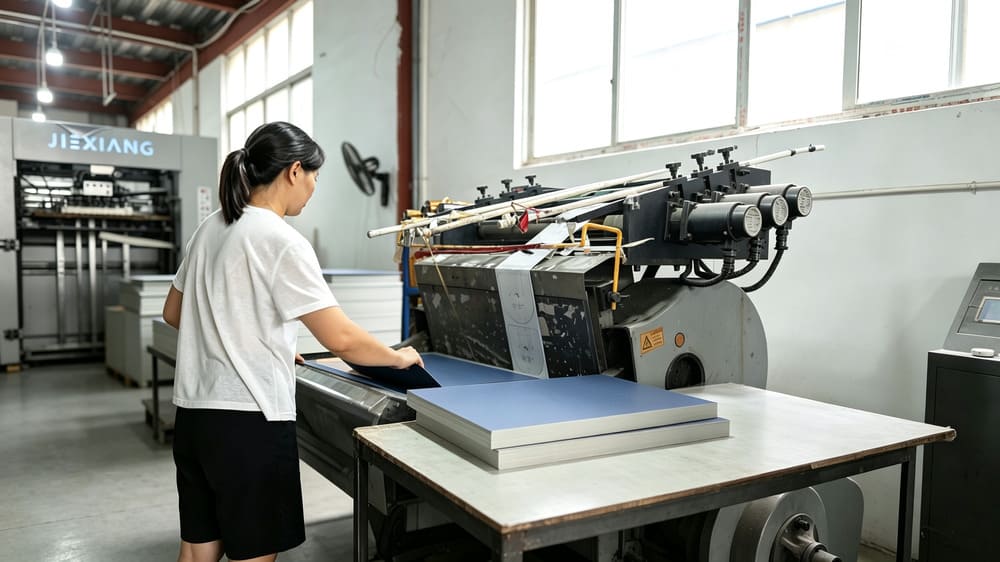
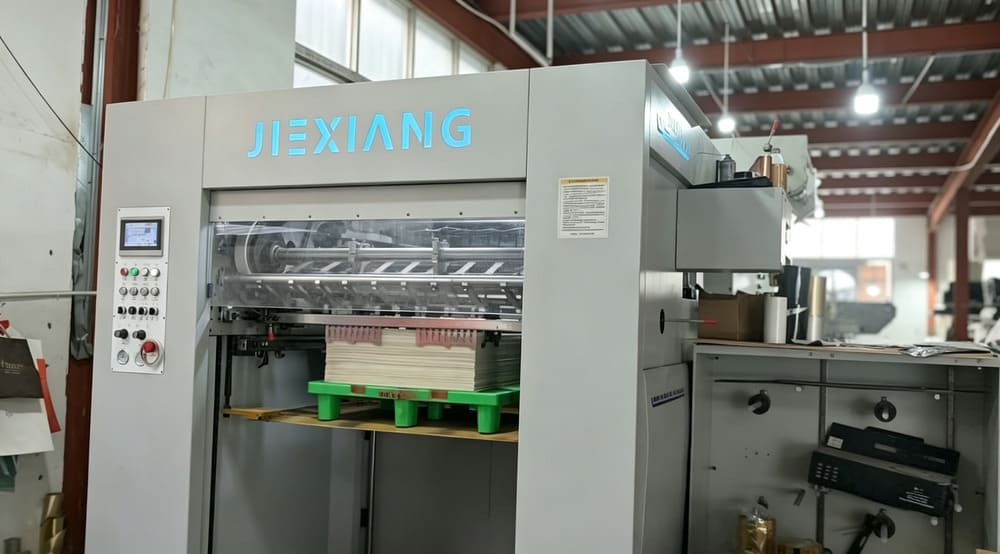
YIMU uses two types of industrial equipment for this work: a JIEXIANG fully automatic platen foil stamping and die-cutting machine, from the JX-1060T/JX-1060TZ family identified in the production brief, and an Original Heidelberg Cylinder SBG configured for die-cutting and hot foil stamping in the 56 × 77 cm (22 × 30 in) format.
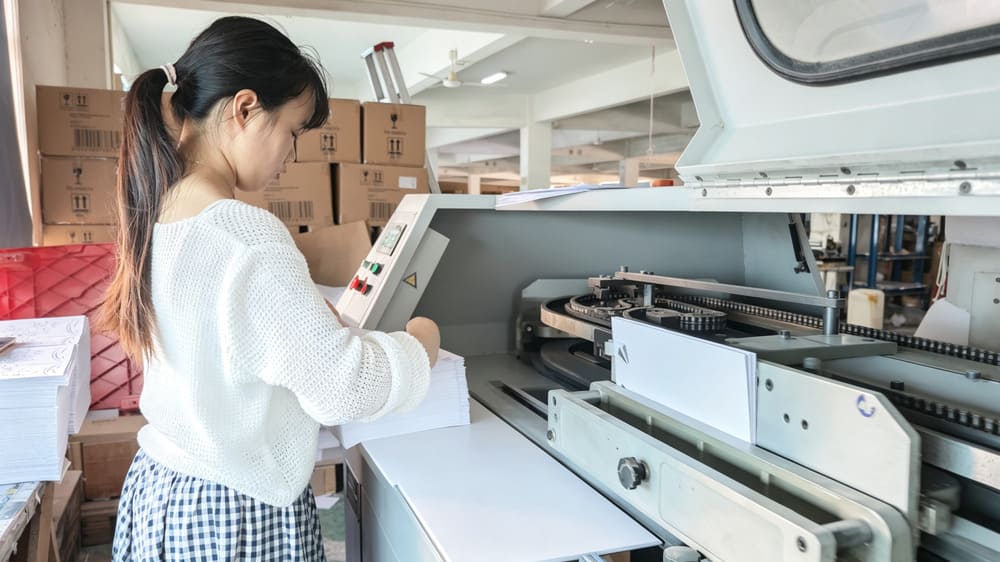
In the workshop, trained operators prepare the job, monitor the machines, examine stamped sheets, and compare the result with the approved sample. The equipment applies heat and pressure, while the production controls determine whether the foil transfers cleanly and appears in the correct place.
What Is Hot Foil Stamping?
Hot foil stamping uses a heated die, pressure, and controlled contact time to release selected layers from a foil carrier and bond them to the substrate. The transferred area follows the shape of the die.
The process can create finishes such as:
- metallic gold, silver, copper, or other colors;
- matte or gloss pigment foils;
- holographic or patterned effects;
- pearlescent accents;
- logos, titles, dates, borders, and icons; and
- selected decorative details combined with printed artwork.
Foil stamping is different from printing a metallic-looking color with ink. The visual effect comes from a transferred foil layer. It is also different from blind embossing, which changes the surface relief without adding foil. Some jobs combine foil and relief, but the tooling, material, and sample must support the intended result.
Why Foil Stamping Matters in Notebook Production
The cover is the first part of a notebook that most customers notice. Foil stamping can give a private-label notebook a recognizable brand mark without covering the full surface.
It is often used for:
- a company logo on a promotional notebook;
- a retail collection name;
- planner dates or edition details;
- a monogram or short title;
- a border, frame, or corner motif;
- a small accent within a printed cover; or
- coordinated decoration across a notebook and gift set.
The finish must be planned as part of the cover construction. A flat printed sheet, laminated paper wrap, textured paper, PU material, cloth, and assembled hardcover case do not respond identically to heat and pressure. The most suitable machine, foil, die, and production sequence depend on what is being stamped.
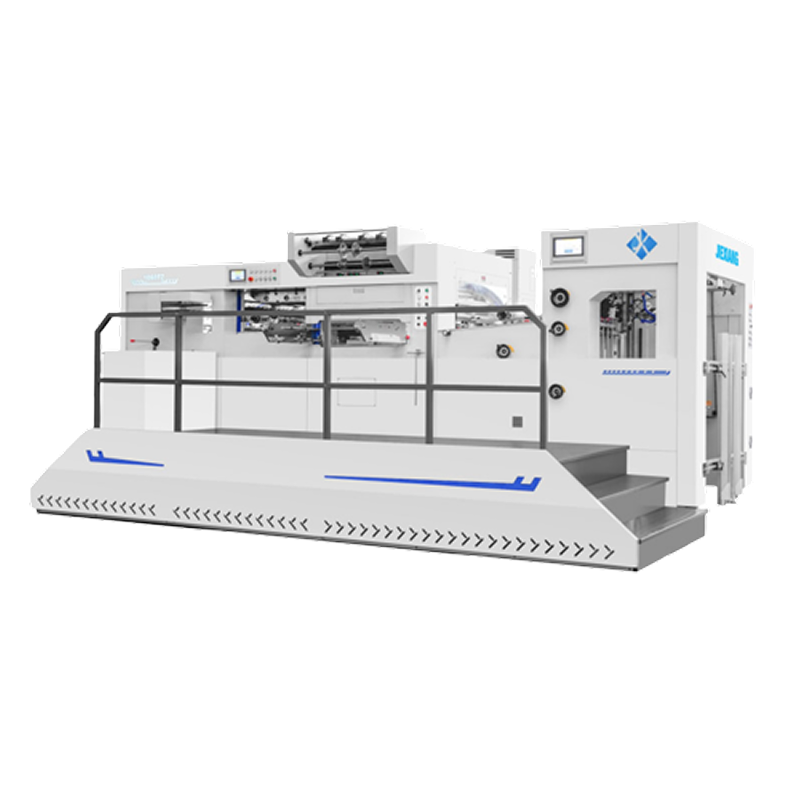
YIMU’s JIEXIANG Automatic Platen Foil Stamping Machine
The JIEXIANG JX-1060T/JX-1060TZ family is designed as fully automatic flatbed equipment for foil stamping and die-cutting work. In a platen process, the die and substrate meet across flat surfaces during the impression.
For notebook production, this type of equipment can support sheet-based cover and component work where the job requires controlled registration, repeated impressions, and an automatic material flow. Depending on the approved job and YIMU’s installed configuration, the equipment may be used for foil stamping, embossing, creasing, or die-cutting operations.
The combined machine capability does not mean every notebook component goes through all processes in one pass. YIMU plans the route according to the artwork, substrate, sheet layout, tooling, and later converting requirements.
The operator’s work includes more than loading sheets. The job must be prepared with the correct die, foil, image position, heating arrangement, pressure, feeding setup, and collection plan. Initial stamped sheets are inspected before the production run continues.
YIMU’s Original Heidelberg Cylinder SBG
The Original Heidelberg Cylinder SBG is a cylinder-format press associated with the 56 × 77 cm sheet size. Machines of this type have often been configured or converted for die-cutting and hot foil work.
Unlike a flat platen impression, the cylinder process brings the sheet and tooling together progressively along a line of contact as the cylinder rotates. This mechanical format can be useful for selected hot-foil and die-cutting jobs when the sheet, image area, material, tooling, and installed foil system are suitable.
YIMU’s operator selects and runs the Heidelberg equipment according to the actual production requirement. The machine name does not establish the heating zones, foil feeds, controls, speed, or conversion package installed on YIMU’s unit. Those details should be verified from the machine and maintenance records rather than inferred from a used-equipment listing.
The Heidelberg Cylinder also requires the same process discipline as newer automated equipment: correct material preparation, secure tooling, controlled heat and pressure, suitable guarding, initial sample approval, and inspection during the run.
Flatbed and Cylinder Foil Stamping: Different Formats, One Quality Goal
The JIEXIANG platen machine and Heidelberg Cylinder SBG apply pressure in different ways. Their practical suitability depends on the job rather than a simple ranking of one machine over the other.
YIMU considers factors such as:
- sheet dimensions and thickness;
- stamping area and image layout;
- substrate surface and heat sensitivity;
- die construction;
- foil type and feed arrangement;
- registration with existing print;
- whether die-cutting, creasing, or embossing is also required;
- order quantity and setup needs; and
- the next converting or cover-making process.
The goal is the same on either machine: an approved foil image with complete transfer, clean detail, correct position, secure adhesion, and no unacceptable damage to the substrate.
How YIMU Prepares a Foil Stamping Job
1. Confirming the cover construction
The team first establishes what will receive the foil. It may be a printed paper cover, laminated wrap, specialty paper, PU component, cloth-covered part, or another approved substrate.
This affects the production sequence. Some materials are stamped before they are mounted to board. Others may be stamped after a cover component has been formed, provided the equipment and surface allow even support and pressure.
2. Reviewing the artwork
Foil artwork is prepared as a separate production layer, normally as solid vector shapes. The team checks the final size, orientation, placement, text, and relationship with the trim, spine, hinges, corners, elastic, closure, or other cover features.
Very fine lines, small counters, narrow gaps, and broad solid areas can behave differently during stamping. YIMU reviews the actual design at production size rather than relying only on a screen mockup.
3. Preparing the die
The stamping die carries the artwork that will transfer the foil. Its material, thickness, relief, mounting, and condition need to suit the job and machine.
The die is checked against the approved artwork before production. Setup personnel also confirm its orientation and position. A reversed, rotated, or incorrectly mounted die can waste both printed sheets and foil.
4. Selecting the foil
Foil is selected by more than color. Its release characteristics and adhesive layer must be compatible with the substrate, stamping conditions, and expected product use.
Two foils described as “gold” may differ in tone, gloss, reflectivity, scratch behavior, and transfer performance. The approved physical sample should therefore identify the chosen foil rather than referring only to a general color name.
5. Establishing the process window
The operator balances temperature, pressure, contact time, foil feed, and sheet registration. These variables interact.
Too little heat, pressure, or contact may produce missing areas or weak transfer. Excessive conditions may fill small details, spread edges, mark the surface, distort heat-sensitive material, or create an impression deeper than intended.
There is no universal setting that works for every cover. YIMU uses setup sheets and the approved physical result to establish the workable conditions for the specific job.
6. Approving initial stamped sheets
The first pieces are compared with the approved artwork and sample. The team checks transfer, edges, position, color and appearance, adhesion, surface condition, and any registration with printed graphics.
The production run proceeds only after the initial result meets the applicable job requirements. Approved setup pieces provide a reference for later checks.
Safe Working Practices Around Foil Stamping Equipment
Foil stamping and die-cutting machines contain closing platens or cylinders, grippers, feeders, foil shafts, rollers, drives, heated dies, cutting tools, and delivery mechanisms. These components can create crushing, shearing, drawing-in, cutting, entanglement, and burn hazards.
General safety principles include:
- allowing only trained and authorized personnel to operate, set up, clean, or maintain the equipment;
- completing the required pre-start inspection;
- confirming that fixed guards, interlocked guards, gates, panels, and emergency controls are installed and functioning;
- keeping hands, clothing, hair, tools, and loose materials away from closing, gripping, feeding, foil-transport, and delivery mechanisms;
- keeping clear of heated dies, chases, plates, and foil-handling components until they are safe to approach;
- never bypassing an interlock, guard, sensor, control, or machine-specific protective device;
- stopping the machine and following the approved procedure before addressing a misfeed, foil break, or jam;
- isolating hazardous energy and controlling residual heat before die changes, chase access, cleaning, adjustment, or maintenance as required by the procedure;
- using approved lifting and handling methods for dies, chases, and heavy tooling; and
- reporting damaged guards, abnormal noise, temperature-control faults, repeated feeding problems, or unexpected movement.
The exact safeguards and procedures differ between the automatic JIEXIANG equipment and the configured Heidelberg Cylinder. Workshop footage should show normal guarded production and must not be presented as an operating tutorial.
How YIMU Checks Foil Stamping Quality
Complete foil transfer
The stamped image is checked for missing areas, pinholes, weak patches, and incomplete edges. The expected result depends on the artwork and substrate texture. A strongly textured surface may require a different visual acceptance standard from smooth laminated paper.
Clean edges and open details
Letter counters, narrow gaps, fine rules, and small icons need to remain readable. Excessive heat or pressure can cause foil to bridge gaps or fill details. Insufficient conditions can leave broken edges.
Registration and position
The foil image is measured or compared with approved reference points on the sheet. When foil aligns with printed graphics, borders, embossing, die cuts, or later cover features, registration becomes especially important.
The team also considers how the flat stamped sheet will be cut, wrapped, folded, or mounted. A foil logo can be correctly positioned on the sheet but appear wrong after case making if the conversion layout is incorrect.
Foil color and visual appearance
The operator checks that the foil matches the approved reference under suitable viewing conditions. Metallic foils change appearance with lighting and angle, so approval should not rely on one phone photograph.
Adhesion and durability
The foil should remain attached under the handling and test method defined for the product. YIMU checks for flaking, lifting, scratching, or transfer to adjacent surfaces after the stamped material has reached the condition required by the process.
The appropriate test depends on the foil, cover material, surface coating, and intended use. A physical sample gives a more reliable reference than a generic claim such as “scratch-proof.”
Surface condition
The area around the foil is checked for dents, scorching, gloss changes, coating disturbance, wrinkles, unwanted embossing, or marks from tooling and handling.
Unwanted foil
Stray foil outside the design can result from dust, die contamination, damaged foil, excess pressure, or contact with unintended raised areas. The inspection looks beyond the logo itself to the surrounding cover surface.
Consistency during production
An approved first piece establishes the initial reference, but checks continue throughout the run. Temperature, foil tension, roll changes, substrate condition, die cleanliness, feeding, and registration may change over time.
Periodic sampling helps YIMU identify variation before more sheets move into cutting, case making, binding, or assembly.
Foil Stamping and Die-Cutting in the Same Production Plan
The JIEXIANG equipment identified in the brief is designed for both foil stamping and die-cutting work. The Heidelberg Cylinder SBG can also be configured for related post-press operations.
For notebook components, die-cutting or creasing may be relevant when a cover requires shaped corners, windows, slots, folds, or another converted feature. Combining processes on suitable equipment can reduce material handling and help maintain the planned relationship between decoration and shape.
This does not mean every foil-stamped notebook cover should be die-cut. YIMU chooses the production route based on the construction. Standard rectangular sheets may be cut on dedicated equipment, while specialty components may benefit from a die-cutting plan.
Tooling and artwork must be coordinated from the start. Foil, cut, crease, emboss, trim, spine, wrap, and hinge positions should not be designed as unrelated layers.
How Cover Materials Affect Foil Stamping
Printed and laminated paper
Laminated paper can provide a smooth surface, but the laminate and foil must be compatible. Heat, coating chemistry, surface energy, and print coverage can influence transfer and adhesion.
Specialty and textured paper
Texture may remain visible through the foil or create small areas of incomplete contact. The desired result should be established with an actual sample rather than assuming the foil will flatten every surface variation.
PU and synthetic cover materials
PU materials vary in grain, coating, softness, heat response, and backing. A setting suitable for one PU may mark, melt, or fail to transfer on another. Material-specific testing is required.
Cloth and fabric-covered materials
The weave and compressibility of cloth affect edge definition and coverage. The support beneath the material and the size of the foil area also influence the result.
Pre-assembled hardcover cases
An assembled case includes board edges, joints, spine spaces, and possible surface height changes. The foil design should avoid areas where uneven support prevents consistent pressure, unless the selected equipment and tooling are designed for that construction.
Finished Product Review: From Stamped Sheet to Notebook
Foil quality should be checked again after the stamped component becomes a finished notebook. Later processes can change what the customer sees.
Cutting may alter margins around the foil. Case making can shift the artwork around board edges and joints. Pressing, stacking, packing, and shipping can scratch or transfer foil if the materials are not compatible or sufficiently protected.
YIMU’s finished-product review can include:
- foil position on the completed front, back, or spine;
- alignment with printing, edges, elastic, closures, or other features;
- consistency of foil appearance across the order;
- clean letterforms and decorative details;
- absence of scratches, flaking, stray foil, or glue marks;
- cover flatness and surface condition;
- correct product version and foil color; and
- appearance under the viewing angles expected in retail or presentation use.
Finished-product photographs and video should show both the full notebook and close-up details. Moving the cover slowly under controlled light can reveal the foil’s reflectivity more effectively than a single front-facing image.
Why Physical Sampling Matters
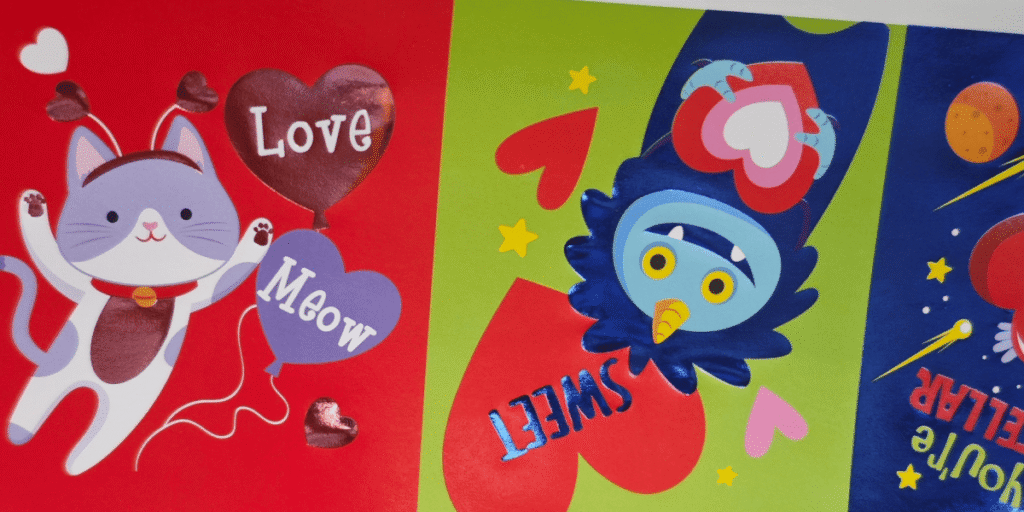
A digital rendering can show the intended position and approximate color, but it cannot predict the interaction among foil, die, temperature, pressure, substrate texture, coating, and later cover conversion.
The approved sample should establish:
- the actual foil reference;
- artwork size and position;
- acceptable transfer on the chosen material;
- registration with print and later converting features;
- acceptable edge and detail quality;
- surface appearance and impression depth;
- handling or adhesion expectations; and
- how the foil looks on the completed notebook.
If the buyer later changes the cover material, lamination, foil, logo size, or construction, the previous settings and sample may no longer represent the new product.
Our custom notebook sample checklist explains what to approve before mass production. You can explore YIMU’s hardcover notebook products, browse our PU crafts collection, and learn more about OEM and ODM notebook manufacturing.
Frequently Asked Questions
Which foil stamping machines does YIMU use?
YIMU’s workshop includes a JIEXIANG fully automatic platen foil stamping and die-cutting machine from the JX-1060T/JX-1060TZ family identified in the production brief, plus an Original Heidelberg Cylinder SBG configured for die-cutting and hot foil work in the 56 × 77 cm format. The exact model and installed options should be confirmed from the machines before publication.
What is the difference between flatbed and cylinder foil stamping?
Flatbed equipment brings two flat surfaces together during the impression. Cylinder equipment creates progressive contact as the cylinder carries the sheet through the impression area. Job suitability depends on the material, image, tooling, sheet format, machine configuration, and production plan.
Can the same machine perform foil stamping and die-cutting?
Some equipment is designed or configured for both operations. The JIEXIANG JX-1060T/JX-1060TZ family is marketed for foil stamping and die-cutting. Heidelberg Cylinder machines can also be configured for related finishing work. Whether YIMU combines operations for a specific notebook depends on the product and tooling.
Why does foil sometimes fail to transfer completely?
Possible causes include an unsuitable foil and substrate combination, incorrect heat or pressure, insufficient contact, a worn or contaminated die, surface texture, dust, coating variation, poor support, or feeding and registration problems.
Can foil stamping be applied to PU notebook covers?
Yes, selected PU materials can be foil stamped, but PU surfaces vary widely. The actual material must be tested for transfer, heat response, edge quality, adhesion, surface marking, and acceptable appearance.
Is foil stamping the same as embossing?
No. Foil stamping transfers a decorative layer to the surface. Embossing creates raised relief, while debossing creates a recessed impression. Foil and relief can be combined when the tooling and material are designed for it.
Can buyers specify “gold foil” without selecting a sample?
The phrase is not specific enough for reliable production approval. Gold foils vary in shade, reflectivity, gloss, and transfer behavior. Buyers should approve a physical foil reference on the selected cover material.
How should a finished foil-stamped notebook be inspected?
Check the full cover and close-up details for position, transfer, clean edges, open lettering, foil color, adhesion, scratches, stray foil, surface marks, and alignment with other cover features. Review several pieces under consistent lighting.
Is this article an operating guide for foil stamping machinery?
No. These machines contain heated tooling, high-pressure closing mechanisms, grippers, cylinders, cutting tools, and moving feeds. Only trained and authorized personnel should operate, set up, clean, or maintain them according to the exact machine manual and YIMU’s safety procedures.