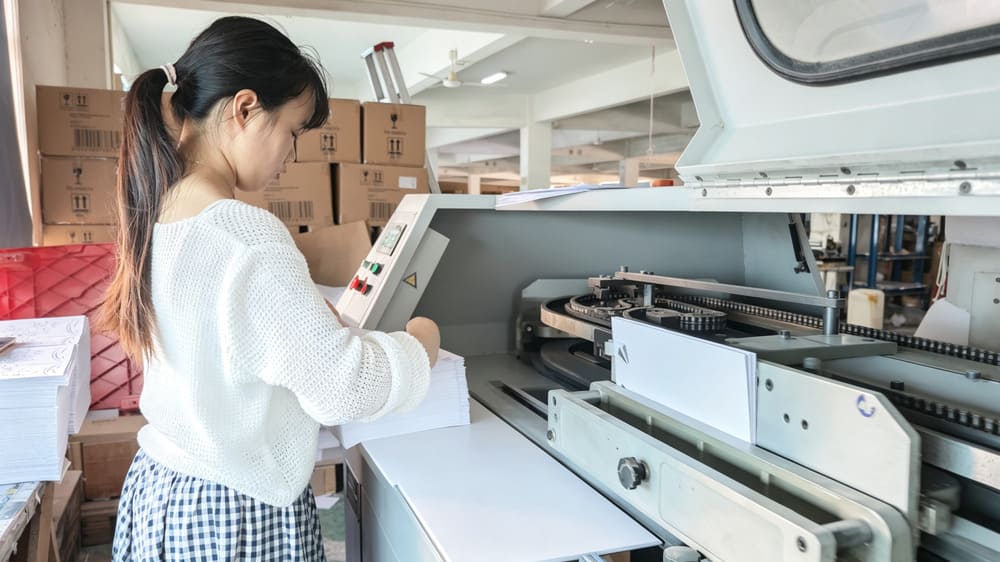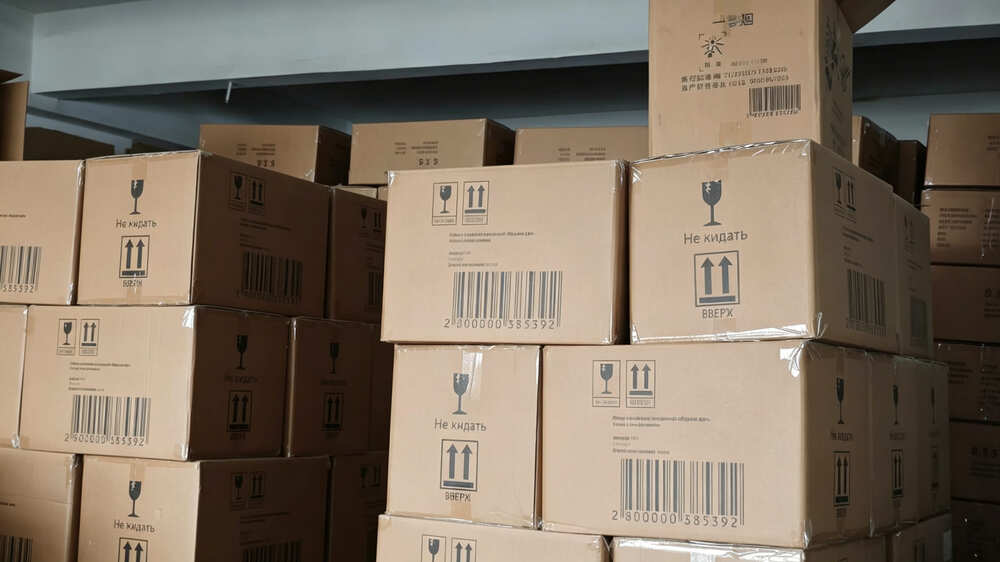
Before printed sheets become notebook pages or covers, they must be cut to the dimensions required by the production plan. This step may look straightforward, but an inaccurate cut can affect the processes that follow—from folding and collating to binding and final trimming.
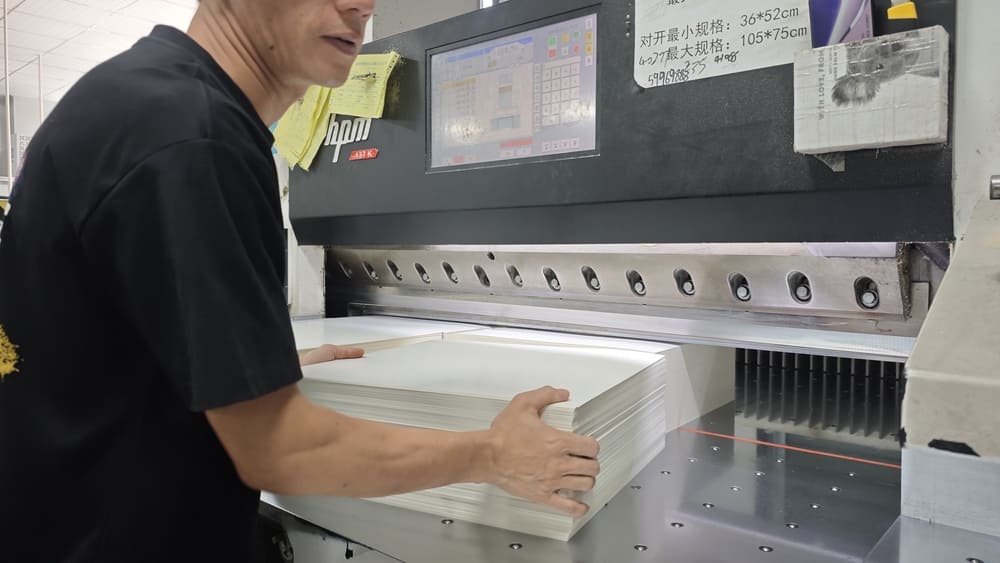
In YIMU’s paper cutting workshop, trained workers operate two industrial paper cutters: the GUOWANG K115CL and the HPM 137K. The machines support production, while the operator, job specifications, material handling, and inspection steps work together to keep each batch aligned with the approved requirements.
The workshop footage shows the practical side of this process: workers prepare paper stacks, confirm settings, operate the cutters, and examine the output before it moves to the next stage of custom notebook manufacturing.
What Does Paper Cutting Do in Notebook Manufacturing?
Paper cutting connects printing with later converting and binding operations. Depending on the product and production plan, printed or unprinted sheets may need to be divided into smaller sections, prepared for folding, or trimmed to a controlled size.
For custom notebooks, cutting can influence:
- the finished page dimensions;
- the alignment of printed lines, grids, text, or artwork;
- the consistency of folded sections;
- the position of holes, sewing, adhesive binding, or other binding features; and
- the appearance of the finished book block and its edges.
A cut sheet must therefore be assessed as part of a larger process. It is not enough for one edge to look clean in isolation. The sheet also needs to match the job specification and remain suitable for the next production step.
The GUOWANG K115CL and HPM 137K at YIMU
YIMU uses the GUOWANG K115CL and HPM 137K for paper cutting work in the factory. Having more than one cutter gives the production team flexibility when arranging jobs with different sheet formats, materials, quantities, and downstream requirements.
The choice of machine for a particular job depends on the production plan. Operators consider the material, stack condition, required cut sequence, dimensions, and the needs of the next process. A notebook interior, a printed cover sheet, and a paper accessory may each require a different setup even when they belong to the same order.
The equipment name alone does not determine the finished quality. Accurate job information, proper preparation, trained operation, and inspection of the physical output remain essential throughout the cutting stage.
How YIMU Prepares a Cutting Job
1. Confirming the job specification
Before cutting begins, the operator works from the relevant production information. This may include the material, required dimensions, cutting layout, orientation, quantity, and notes related to printing or later binding.
For printed sheets, orientation matters. Cutting must preserve the intended relationship between the printed content and the finished page. Page margins, crop references, lines, and artwork placement may all provide useful checkpoints.
2. Checking the paper stack
The team checks that the correct material has reached the machine and that the stack is suitable for handling. Sheets need to be arranged consistently so that movement, damaged edges, or mixed materials do not introduce avoidable variation.
3. Setting the cutting sequence
The operator follows the approved cut plan and machine-specific procedure. The sequence matters because each cut establishes a new reference edge for the cuts that follow. A clear sequence also helps the team manage the paper efficiently and keep cut components identified.
4. Reviewing the first cut pieces
Initial pieces are checked before the full batch proceeds. The operator can compare key dimensions, edge condition, orientation, and printed alignment with the production requirement. If the result does not match the job, the setup must be reviewed before continuing.
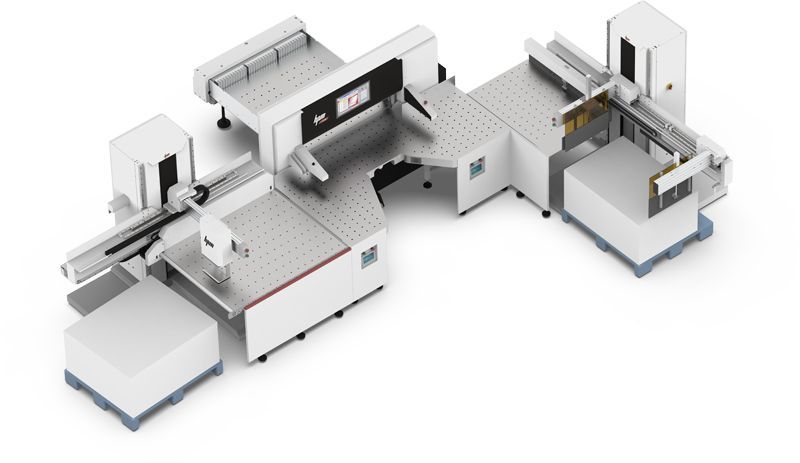
Safe Operating Practices Around Industrial Paper Cutters
Industrial guillotine cutters contain sharp blades, clamping mechanisms, and powered moving parts. They must only be used by trained and authorized personnel. The exact procedure depends on the machine, its installed safeguards, the manufacturer’s instructions, and the factory’s safety system.
At a general level, safe working practices include:
- completing the required pre-start checks;
- confirming that guards and safety devices are present and functioning;
- keeping hands and other body parts away from the cutting and clamping area;
- using the machine controls exactly as designed and never bypassing safeguards;
- keeping the work area organized and free of unnecessary items;
- stopping the machine and reporting any fault or abnormal behavior; and
- applying the required energy-isolation procedure before blade work, maintenance, cleaning, or other tasks that expose a worker to hazardous movement or stored energy.
These points are a safety overview, not an operating guide. A photograph or video should also never encourage viewers to copy a technique without training. For publication, YIMU should select footage that clearly shows controlled material handling, an orderly work area, and correct use of the machine’s installed safeguards.
How Cutting Checks Support Product Quality
Dimensions are checked against the job requirement
The team checks cut pieces against the dimensions specified for the job. This helps identify a setup difference before the material enters folding, binding, or assembly.
Printed content is checked for position and orientation
For customized inner pages and covers, size is only part of the review. The cut must also leave the intended margins and preserve the correct orientation of the artwork. A dimensionally acceptable sheet may still be unsuitable if printed elements are positioned incorrectly.
Edge condition is reviewed
Workers look at the physical cut edge for visible issues that could affect appearance or later processing. The assessment depends on the paper and the product design, since different materials can behave differently during cutting and binding.
Materials remain identified between processes
After cutting, components need to stay associated with the correct job and production stage. Clear separation and identification reduce the risk of mixing similar-looking paper, versions, or notebook components.
Feedback connects cutting with later production
Cutting quality becomes even clearer at the next stage. If sheets do not fold, collate, punch, sew, glue, or trim as expected, the team can trace the issue back to the relevant production information and cutting setup. This feedback helps prevent a small dimensional difference from becoming a larger assembly problem.
Why Paper Cutting Matters to Custom Notebook Buyers
Buyers usually evaluate the finished notebook rather than the cut sheets used to make it. Yet several visible details begin at the cutting stage: balanced margins, consistent page size, aligned printed content, tidy book blocks, and reliable fit between the interior and cover.
For a custom project, the approved artwork and physical sample provide important references. Paper behavior, printing, folding, binding, and finishing also need to be considered together. This is why YIMU treats cutting as part of a connected manufacturing workflow rather than an isolated machine operation.
If you are preparing a notebook with custom page layouts, our guide to customizing notebook inner pages explains key design choices. Before mass production, the custom notebook sample checklist can help your team review dimensions, printing, materials, and construction. You can also learn more about YIMU’s OEM and ODM notebook manufacturing services.
Frequently Asked Questions
Which paper cutters does YIMU use?
YIMU’s workshop includes a GUOWANG K115CL and an HPM 137K. The production team selects equipment and plans the cutting process according to the material, sheet format, job requirements, and subsequent manufacturing steps.
Why are sheets checked after the first cuts?
An early check helps the operator compare dimensions, orientation, printed alignment, and edge condition with the job requirement before the full batch continues.
Does accurate cutting affect notebook binding?
Yes. Cut dimensions and sheet consistency can affect folding, collating, punching, sewing, adhesive binding, cover fit, and final trimming. The exact impact depends on the notebook’s construction.
Can every type of paper use the same cutter settings?
No. Paper type, thickness, stack condition, printed content, cut layout, and the needs of the next process can all influence job preparation. The operator follows the approved production plan and the machine-specific procedure.
Is this article an operating guide for a paper cutter?
No. Industrial paper cutters are high-risk machines. Only trained and authorized personnel should operate or service them in accordance with the manufacturer’s manual, installed safeguards, workplace procedures, and applicable safety requirements.
Plan Your Custom Notebook Project with YIMU
Tell us your notebook size, paper choice, page layout, binding style, quantity, packaging needs, and target market. YIMU can review these requirements as part of a complete custom notebook production plan.