A printed sheet does not become a usable notebook section until it has been folded in the right direction, in the right sequence, and at the right position. A small fold difference can shift margins, disturb page order, or make later binding less consistent.
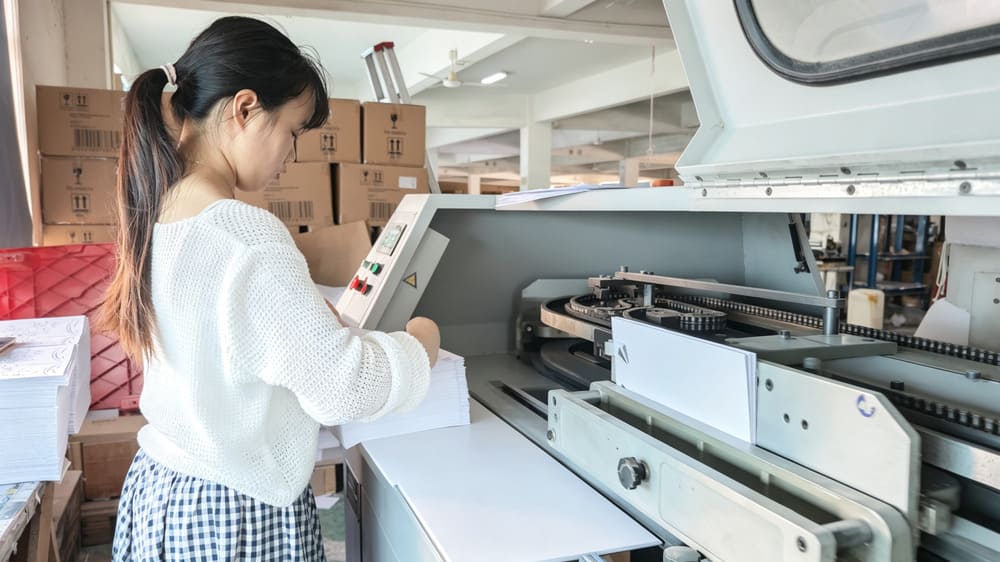
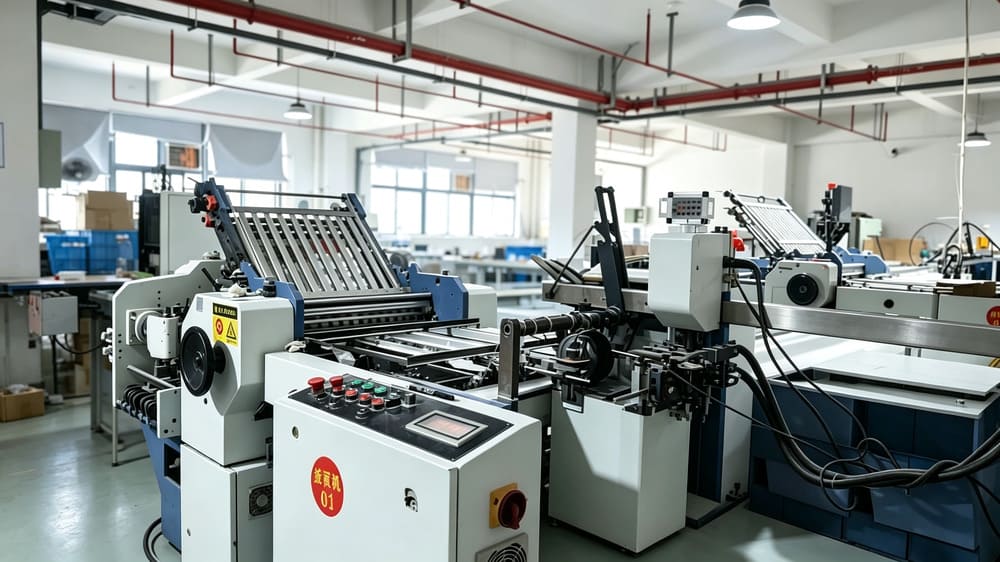
YIMU uses an AOQI 570T-10K paper folding machine as part of its notebook production workflow. In the workshop, a trained operator prepares the job, watches the sheets move through the machine, examines folded samples, and keeps the output organized for the next process.
The equipment handles the repeated mechanical work, but the result still depends on the approved layout, paper characteristics, machine setup, and checks carried out during production.
What Does a Paper Folding Machine Do?
An industrial paper folding machine feeds flat sheets through a series of controlled folding components. Depending on the job and machine configuration, a sheet may receive one fold or several folds in a planned sequence.
In notebook manufacturing, larger printed sheets are often folded into sections, commonly called signatures. These folded sections can then move to collating, sewing, adhesive binding, or another construction process. The exact route depends on the notebook format and binding style.
Folding affects more than the shape of the sheet. It can influence:
- page order and orientation;
- the position of printed margins and ruled layouts;
- alignment between the front and back of a printed sheet;
- the way folded sections sit together;
- the performance of later sewing, gluing, trimming, or cover assembly; and
- the appearance and opening behavior of the finished notebook.
For this reason, folding is treated as a controlled production stage rather than a simple transfer between printing and binding.
The AOQI 570T-10K in YIMU’s Workshop
The AOQI 570T-10K is one of the folding machines used in YIMU’s factory. It belongs to AOQI’s 570T commercial paper folder series, which the manufacturer describes as equipment for large-format sheet folding.
At YIMU, the machine is used according to the needs of the current order. The operator considers the sheet size, paper, printed layout, required fold pattern, and next manufacturing stage when preparing the job.
The model name alone does not guarantee a good folded section. Machine condition, correct setup, stable sheet feeding, and inspection of actual output all matter. When the paper or layout changes, the operator needs to assess the new job rather than assume that a previous setup can be reused unchanged.
How YIMU Prepares a Folding Job
1. Confirming the job and page layout
The operator starts with the production information for the order. This may include the paper specification, flat-sheet format, fold sequence, page orientation, quantity, and requirements for the next process.
For printed notebook interiors, imposition is important. Pages are arranged on the sheet so that they appear in the intended order after folding and binding. The operator therefore needs the correct artwork version and fold plan before production begins.
2. Checking the incoming sheets
The team confirms that the material matches the job. Sheet condition also matters. Bent corners, damaged edges, static, inconsistent stacks, or sheets that have not been handled properly can affect feeding and folding.
Printed sheets must be sufficiently ready for post-press handling. If ink, coating, or another printed surface is not suitable for the next step, rubbing or marking may occur as sheets move through the machine.
3. Setting the feeder and fold path
The operator prepares the feeder, guides, folding components, delivery, and other job-specific settings in accordance with the machine manual and production plan. The goal is to move each sheet through the same controlled path without skewing, double feeding, or losing registration.
4. Running setup sheets
Setup sheets allow the operator to examine the fold before the full batch runs. The first pieces are checked for fold position, page sequence, orientation, squareness, and visible damage. Adjustments are made if the sample does not match the job requirement.
5. Releasing the job for continued production
Once the setup result is acceptable, the operator continues the run and keeps checking output at appropriate intervals. Folded sections are collected and identified so they remain connected to the correct order, version, and next process.
Safe Working Practices Around a Folding Machine
Paper folding machines contain powered rollers, belts, pulleys, and other moving components. These can create drawing-in, trapping, pinching, cutting, or entanglement hazards. Operation and servicing must be limited to trained and authorized personnel.
General safe-working principles include:
- completing the required pre-start inspection;
- confirming that fixed and interlocked guards are correctly positioned and functioning;
- keeping hands, loose clothing, hair, tools, and personal items away from moving rollers and belts;
- using operating, slow-movement, and emergency controls only as specified by the manufacturer;
- never bypassing a guard or safety device;
- stopping the machine and following the approved procedure before addressing a misfeed or blockage;
- applying the required energy-isolation procedure before cleaning, maintenance, or any task that exposes hazardous moving parts; and
- reporting unusual noise, vibration, repeated feeding problems, or damaged safeguards.
These points are not a substitute for the AOQI manual, operator training, YIMU’s workplace procedures, or the applicable safety requirements. The correct response to a paper jam or adjustment depends on the machine configuration and risk assessment. An operator should never reach into moving rollers to pull out a sheet.
How Folding Checks Support Notebook Quality
Fold position
The fold needs to fall where the production layout requires it. The operator compares folded samples with the job specification and approved reference. A fold that drifts from its intended position can create uneven margins or affect later trimming.
Page order and orientation
A folded section may look tidy while still containing pages in the wrong order or direction. Opening and checking the sample helps confirm that the imposed sheet has produced the intended sequence.
Squareness and alignment
The edges and printed elements of a folded sheet provide visual references. If the sheet feeds at an angle, the fold may be skewed. Checking alignment early helps prevent a feeding issue from continuing through the batch.
Crease and surface condition
The fold is reviewed for visible cracking, wrinkling, scuffing, marking, or other damage. Results can vary with paper thickness, fiber direction, printed coverage, coating, moisture, and fold geometry. Some materials or designs may need a different production approach, such as scoring before folding, based on the approved specification and trial result.
Feeding consistency
The operator watches for double sheets, missed sheets, irregular spacing, and repeated jams. Stable feeding supports a more consistent fold and reduces the chance that incomplete or incorrectly folded pieces enter the next stage.
Checks during the run
The first approved piece is an important reference, but it is not the end of quality control. Material behavior and machine settings can change during a production run. Periodic checks help the operator identify a shift in fold position, feeding, or sheet condition while corrective action is still practical.
Folding as Part of a Connected Manufacturing Process
Folding quality must be judged in relation to printing and binding. A well-folded section should carry the printed layout correctly and be ready for its planned next process.
For example, folded signatures for a sewn notebook need to remain in the correct sequence and sit consistently for gathering and sewing. Sections intended for adhesive binding must suit the planned spine preparation and trimming process. Printed pages also need enough allowance for final trim while preserving the intended content area.
YIMU’s production team uses the job specification and physical output to connect these stages. When a folded sample does not behave as expected, the cause may involve the fold setup, sheet condition, printed layout, paper selection, or the relationship between several processes. Reviewing the whole production path is more useful than judging the folding machine alone.
Why Folding Matters to Custom Notebook Buyers
Folding is mostly hidden inside the finished product, but buyers can see its effects. Page sequence, margin balance, binding alignment, edge consistency, and the way a notebook opens can all reflect how the inner sections were prepared.
This is especially relevant for customized interiors. A planner with dated spreads, a journal with numbered pages, or a branded notebook with repeated headers gives the production team clear alignment and sequence requirements. Early approval of the artwork, paper, sample, and construction helps reduce misunderstandings before mass production.
Our guide to customizing notebook inner pages explains the choices involved in page layouts and printed content. The custom notebook sample checklist covers points to review before a bulk order. You can also explore YIMU’s OEM and ODM notebook manufacturing services.
Frequently Asked Questions
Which folding machine does YIMU use?
YIMU’s workshop includes an AOQI 570T-10K paper folding machine. The equipment is used for sheet-folding work according to the paper, printed layout, fold plan, and notebook construction required by each order.
What is a folded signature?
A signature is a printed sheet folded into a section of pages. Several signatures can be gathered in sequence and bound to form a notebook or book block. The number of pages in a signature depends on the layout and fold plan.
Why check page order after folding?
Printed pages are imposed on a flat sheet before folding. Opening the folded sample confirms that the pages appear in the correct order and orientation before the batch moves to binding.
What can cause an inaccurate or untidy fold?
Possible factors include incorrect setup, skewed feeding, sheet variation, static, damaged paper, paper thickness, fiber direction, coating, printed coverage, or an unsuitable fold plan. The operator checks the physical result and adjusts the process according to the approved requirements.
Does every notebook require machine-folded signatures?
No. The manufacturing route depends on the notebook’s size, page count, binding style, materials, and design. Some products use folded signatures, while others use individual sheets or different section structures.
Is this article an instruction manual for the AOQI 570T-10K?
No. Only trained and authorized workers should operate, adjust, clear, clean, or maintain an industrial folding machine. They must follow the exact machine manual, installed safeguards, site procedures, and applicable safety rules.
Discuss Your Custom Notebook Requirements with YIMU
Share your notebook dimensions, page count, paper, printed layout, binding style, order quantity, packaging needs, and target market. YIMU can review how these choices fit into the printing, folding, binding, and finishing plan.